
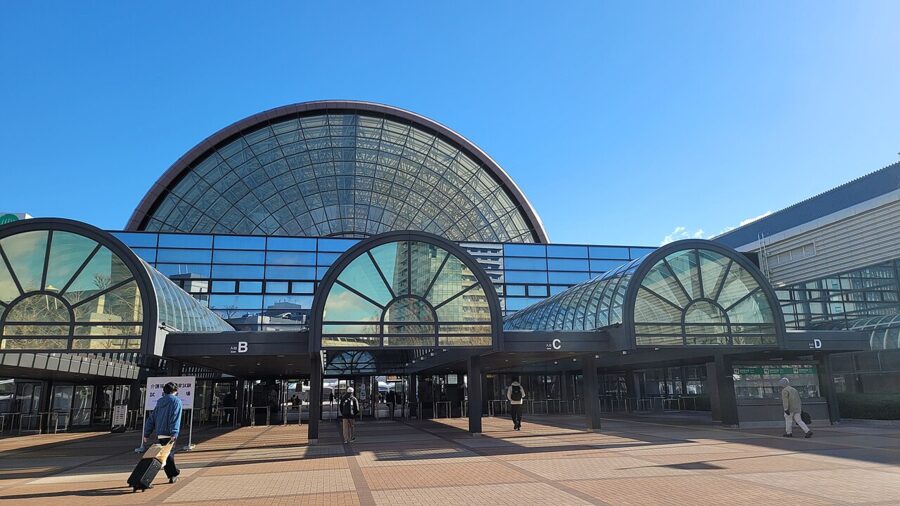
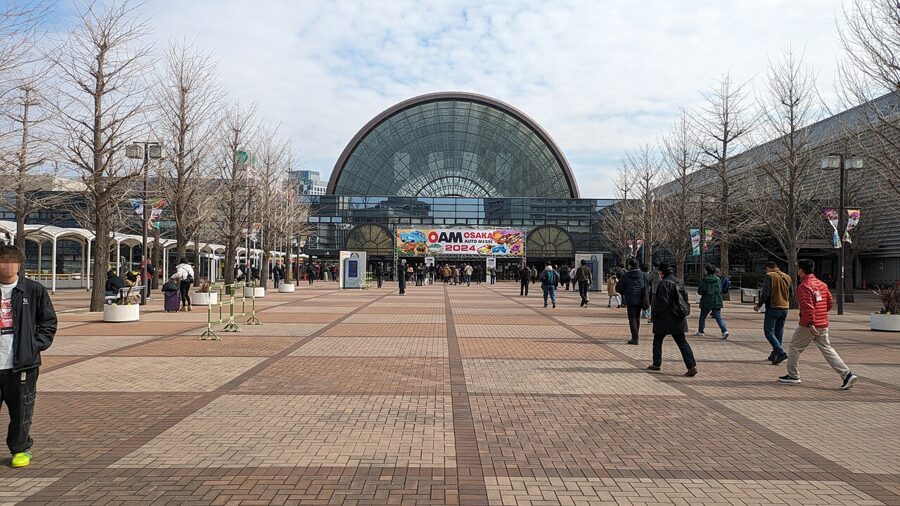
AnimeJapan 2027 opens its public doors at 9:00 on Saturday, March 27, at INTEX Osaka, a convention center on reclaimed land in Osaka Bay. For the first time since it began in 2014, the show is not in Tokyo. The move changes the trains, the hotels and the shopping street you pair it with, but the date that decides your trip is still a weekday evening in January, when the tickets with stage lottery rights go on sale.
Nothing about 2027 tickets has been announced yet (as of November 2026). What is known is the pattern: in both 2025 and 2026, sales opened in mid-January at 20:00 Japan time, at ¥2,500 (about $17) a day. Watch the official site, anime-japan.jp, from New Year onward.

The rest is easier than the ticket. INTEX Osaka is about 35 minutes from Umeda on Osaka Metro, Den Den Town is the city’s answer to Akihabara, and late March is when Osaka’s cherry trees start to open. I would plan this as a long weekend in Osaka with the show at its center, not as a day trip from Tokyo.

On this page
What AnimeJapan is, and who runs it
AnimeJapan is the anime industry’s own spring show. It began in 2014, when two older Tokyo fairs, the Tokyo International Anime Fair and the Anime Contents Expo, merged into one event. It is run by the AnimeJapan Organization, a general incorporated association, and the day-to-day office is handled by Sony Music Solutions.
The executive committee behind it reads like the credits of a season’s anime: Aniplex, Animate, Kadokawa, Toei Animation, Toho, TMS Entertainment, Production I.G, Studio Pierrot, Pony Canyon and others, plus the Association of Japanese Animations. That matters for what you see inside. This is where the companies that make and sell anime announce what comes next, not a fan-run convention with an artist alley.
By the organizer’s count the show draws more than 150,000 people from around 100 countries and regions. The 2026 edition had more than 200 exhibitors, about 300 titles on show, and more than 300 people on its stages over the weekend.
Public days and business days
AnimeJapan runs as two events under one name. The public days are the weekend show most people mean: exhibitor booths, the AJ Stages, official merchandise and the cosplay area, open to anyone with a ticket. The business days are a trade fair for licensing, distribution and production deals, with seminars and an “Anime Business Concierge” desk that matches buyers with rights holders.
Business days need registration as a trade visitor, and a fan ticket does not get you in. If you work in the industry, they are worth the paperwork, because the meetings are the point. If you don’t, ignore them and plan only around the weekend.
The move to INTEX Osaka for 2027 and 2028
The organizer announced the move on the opening day of AnimeJapan 2026 in Tokyo. Its reasons were Osaka’s long history as a trading port, the crowds that came for Expo 2025, and reaching fans in western Japan who rarely made the trip to Tokyo. The Osaka Convention and Tourism Bureau is backing it, and 21 committee companies and one association said on the day that they would exhibit.
What the organizer has announced (as of November 2026)
| Public days | Business days | |
|---|---|---|
| Dates | Saturday, March 27 and Sunday, March 28, 2027 | Friday, March 26 and Saturday, March 27, 2027 |
| Hours | 9:00 to 17:00, last entry 16:30 | Friday 10:00 to 18:00 (last entry 17:30); Saturday to 17:00 (last entry 16:30) |
| Halls | INTEX Osaka Halls 2 to 6 | INTEX Osaka Hall 1 |
| Inside | Exhibitor booths, AJ Stages, organizer events, official goods | Exhibitor booths, business seminars, Anime Business Concierge |
| Tickets | Not yet announced | Trade registration, not yet open |
One thing has already changed since the announcement. The March 2026 release put the business days on Monday and Tuesday, March 29 and 30, after the fan weekend. The official outline now puts them on Friday and Saturday, March 26 and 27, in Hall 1, so the Saturday is shared by trade visitors and fans in separate halls.
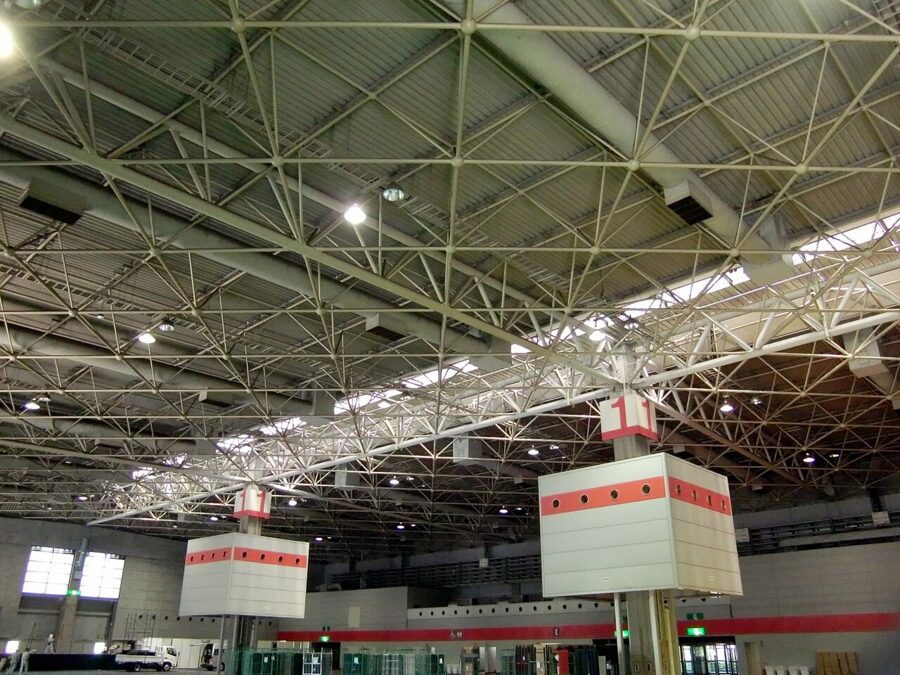

INTEX Osaka is the Osaka International Exhibition Center, open on this site since 1985. It has six halls and about 70,000 square meters of exhibition space, which makes it the third-largest venue of its kind in Japan after Tokyo Big Sight and Makuhari Messe. It is smaller than the Tokyo setup AnimeJapan has used, and I would expect the aisles to feel it.
The Tokyo Big Sight pattern
Until 2026 the show lived at Tokyo Big Sight. The last Tokyo edition used the East Exhibition Halls 4 to 8, the South Halls 1 to 4 and the rooftop area, with public days on Saturday and Sunday, March 28 and 29, and business days on the Monday and Tuesday after. A children’s sister event, Family Anime Festa, ran alongside in one of the South Halls.
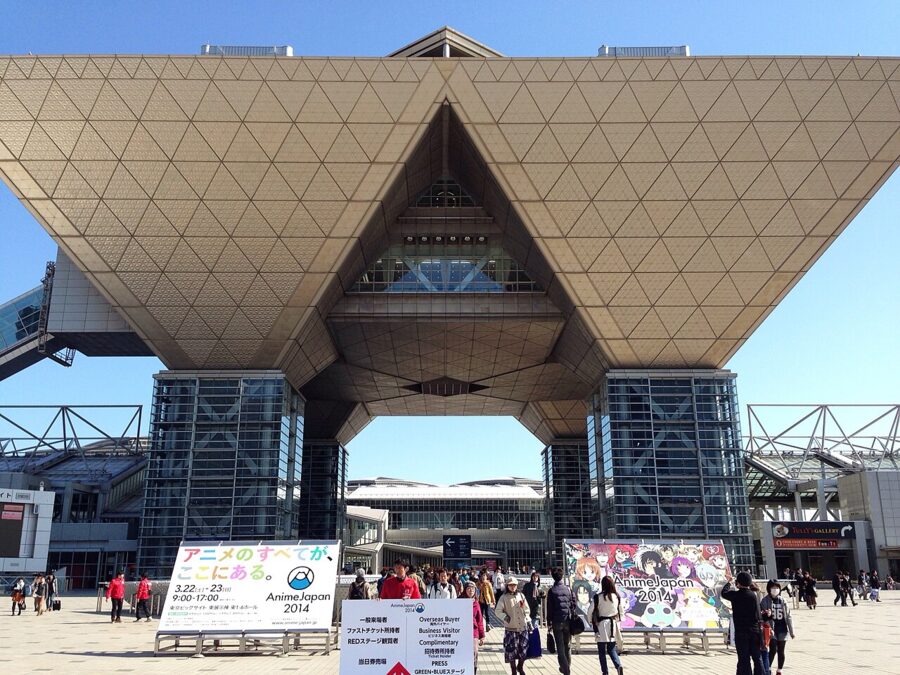

The shape has been steady for years: late March, a Saturday and Sunday for fans, doors at 9:00, last entry at 16:30. The Osaka dates keep that shape. What the organizer has not yet published for 2027 is the hall map, the stage line-up, the cosplay rules at the new venue and whether Family Anime Festa comes along.
If you are weighing late March against other seasons, the season guide sets AnimeJapan against the rest of the year’s weather, crowds and events.
Tickets: how they sold, year by year
Every AnimeJapan ticket is for one named day. There has never been a two-day pass, so a weekend means two tickets. Children of elementary school age and younger get in free, but only with a guardian aged 18 or over, one guardian per child, and the guardian needs a ticket of their own.
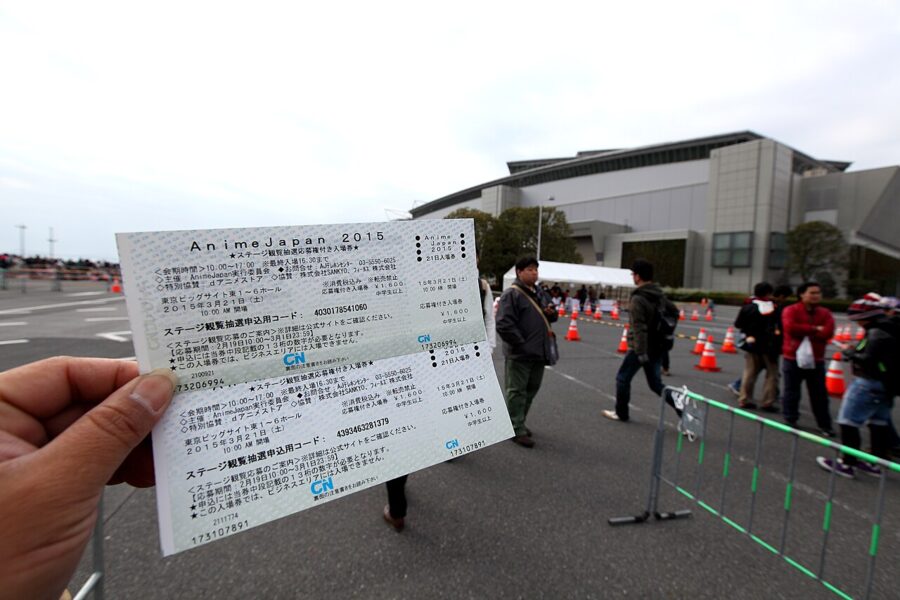

Here is what the last three Tokyo editions charged. Prices include tax; sellers can add a system fee and an issuing fee at checkout.
| Ticket | 2024 | 2025 | 2026 |
|---|---|---|---|
| Advance, with stage lottery | ¥2,300 (about $15) | ¥2,500 | ¥2,500 |
| Advance, without stage lottery | ¥2,300 | ¥2,500 | ¥2,500 |
| Same day | ¥2,600 (about $17) | ¥2,800 (about $19) | ¥2,800 |
| Lottery tickets on sale | February 8 | January 17, 20:00 | January 16, 20:00 |
In 2026 the order was simple. Tickets with stage lottery rights sold from January 16 to February 24, then the plain advance tickets took over from February 25 until the night before the show, at the same price. The lottery itself ran from February 27 to March 5. For 2027, treat mid-January as the likely opening and confirm it on the official site; nothing is fixed until the organizer posts it.
The stage lottery
The seated AJ Stage programs, the voice actor panels, premieres and series announcements, are only for lottery winners. Buy a ticket with stage lottery rights and you get a link to apply for up to five programs, all on the day printed on your ticket, and you cannot enter the same program twice. Entering costs nothing; fees apply only if you win and are issued a seat.
The stages in 2026 were named RED, GREEN, BLUE and WHITE, and the 2027 site uses the same names. BLUE and WHITE had standing areas open to anyone with an admission ticket, which is how most visitors catch a panel. Photography and recording are banned at every AJ Stage.
Should you bother? Only if a specific series you love is on the line-up, and that line-up appears after the lottery tickets go on sale. I would buy the lottery version anyway, since it cost the same in 2025 and 2026. It keeps the option open for the price of a click.
Same-day tickets and the Fast Ticket
Same-day tickets in 2026 were web tickets sold from 5:00 on the morning of each public day, plus a ticket counter at the venue, at ¥2,800. They were sold while supplies lasted. Buying one on your phone on the train is fine; queueing at the venue counter costs you the opening hour, which is the best hour of the day.
The Fast Ticket is a separate add-on that lets you enter before general admission, in numbered order, after premium ticket holders. It was sold only through CN Playguide in 2026, and you still need an admission ticket on top. The organizer had not published a 2027 price or sale date as of November 2026.
Children, re-entry and the rules at the gate
Overnight queueing is not allowed. Re-entry works on the same day only, and it can be slow when the halls are full. There are bag checks at the gates.
The banned list in 2026 included bottles and cans, alcohol, glow sticks 30 centimeters or longer, drones, scooters and skateboards, and blades longer than 5.5 centimeters. Cosplay prop weapons had to be under 130 centimeters. Bring drinks in plastic bottles, and leave anything bigger than a backpack at your hotel.
The halls are wheelchair accessible, with accessible restrooms and elevators, but there are no separate entrances or routes. An attendant needs a full ticket, and there is no discount for disabled visitors.
Getting to INTEX Osaka
INTEX Osaka sits in the Nanko district, on the man-made islands of Osaka Bay. Two Osaka Metro lines serve it, and on a show day the choice between them matters more than it looks on the map.
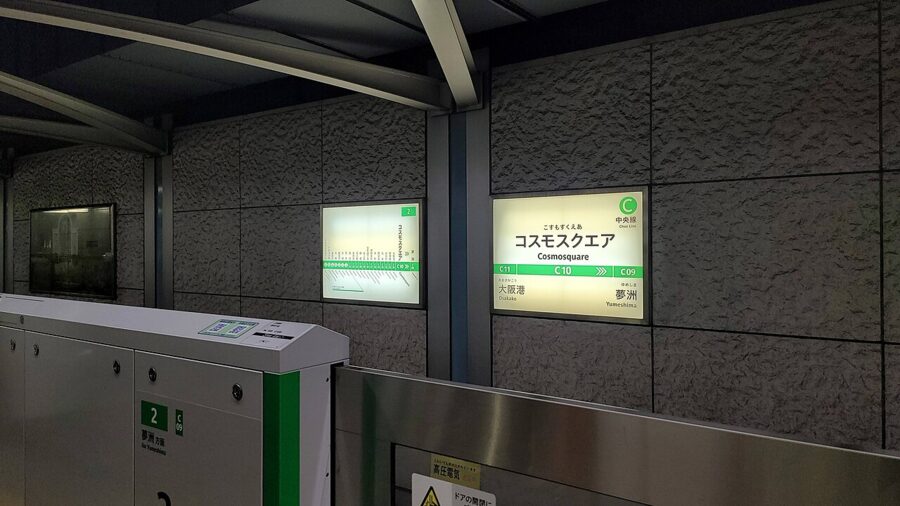
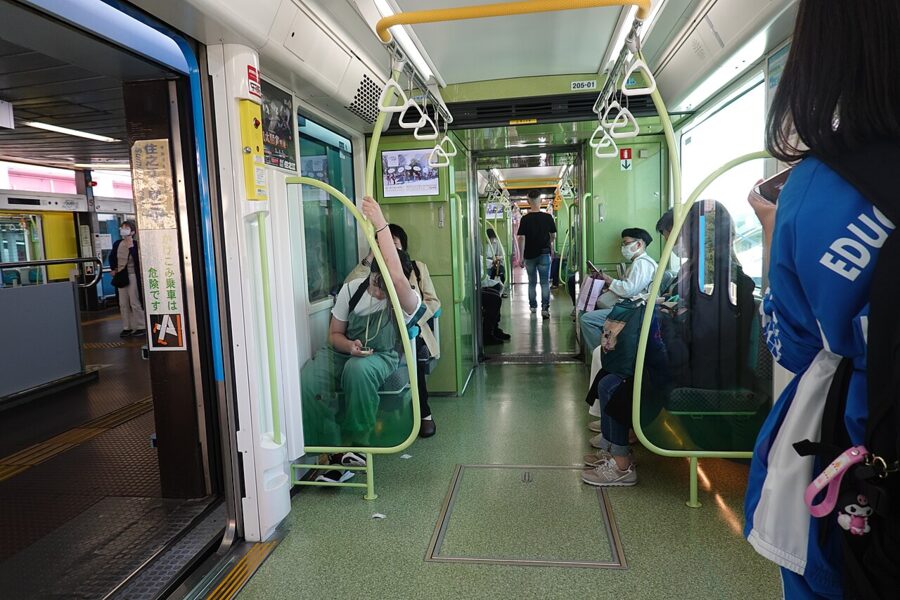
- Nakafuto Station (中ふ頭, Nanko Port Town Line, the “New Tram”): about 5 minutes on foot to the west gate.
- Cosmosquare Station (Chuo Line and New Tram): about 9 minutes on foot.
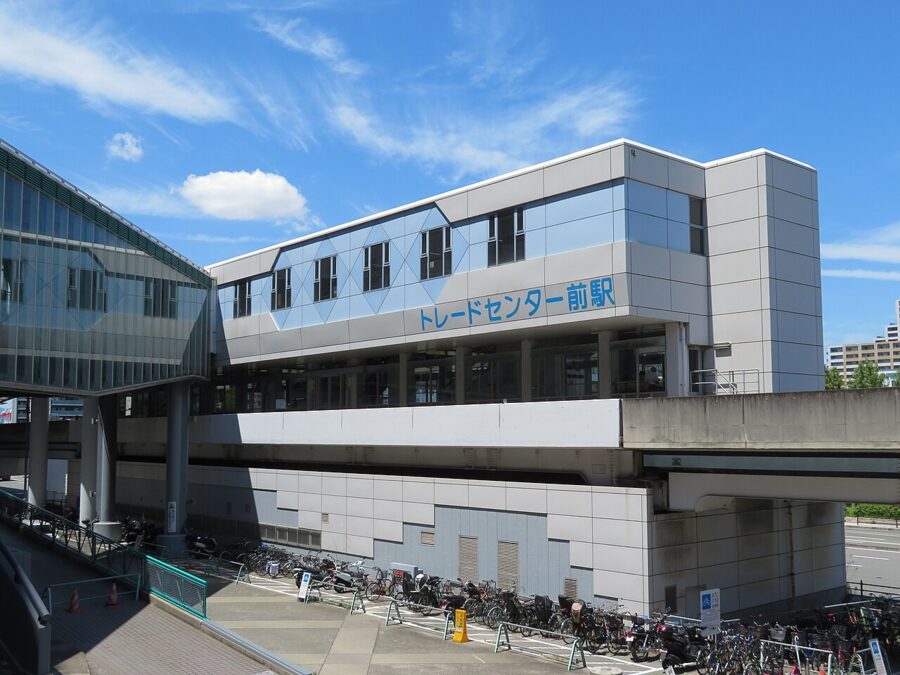
- Trade Center-mae Station (New Tram): about 8 minutes on foot.


From Umeda, Namba and Shin-Osaka
From Umeda, take the Midosuji Line to Hommachi, change to the Chuo Line for Cosmosquare, and either walk or ride the New Tram one stop to Nakafuto. Allow about 35 minutes door to door with two changes. The fare is ¥290 (about $2) under Osaka Metro’s distance bands (as of November 2026).
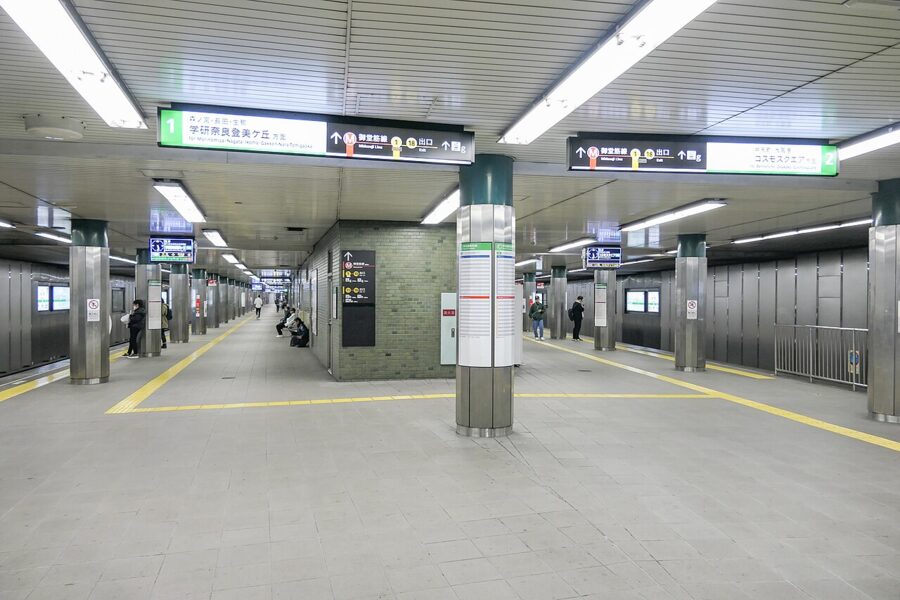
From Namba, the Midosuji Line north to Hommachi joins the same route. The other way is the Yotsubashi Line south to Suminoekoen and the New Tram up to Nakafuto, which avoids Hommachi but puts more of your trip on the small trains. From Shin-Osaka, stay on the Midosuji Line through Umeda to Hommachi and change there.
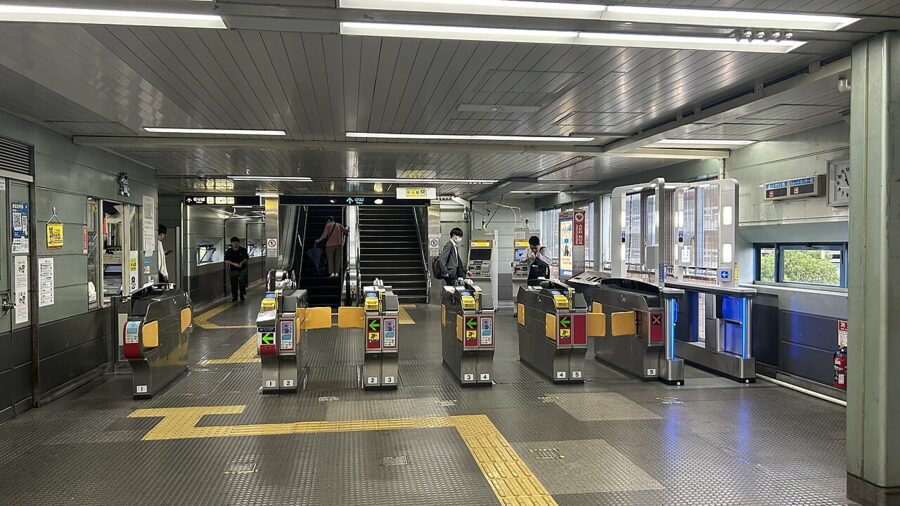
My pick in the morning is the Chuo Line to Cosmosquare and a 9-minute walk. You skip the New Tram queue, and the walk is flat. In the evening the same logic holds, only more so.
From Kansai Airport or from Tokyo
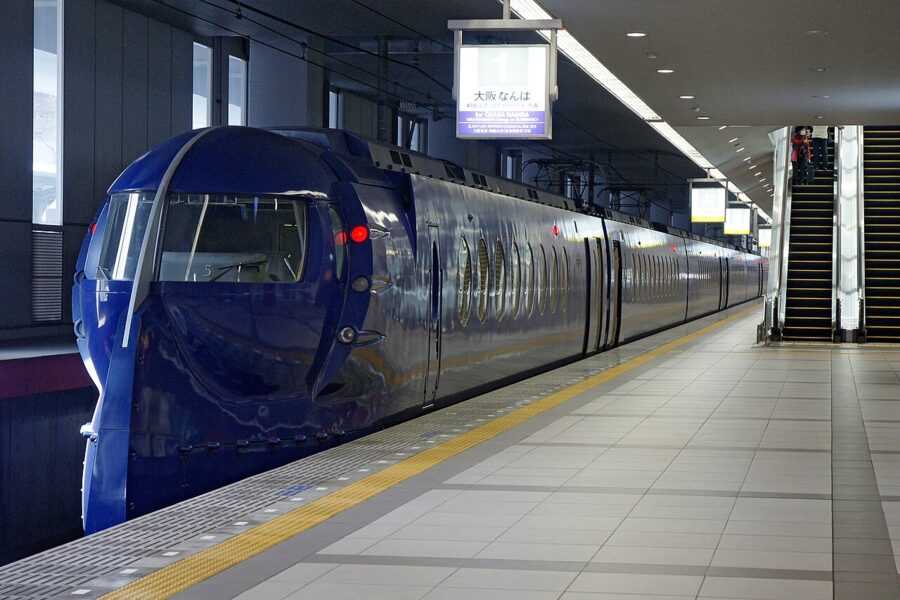
Fly into Kansai International Airport if you can. Nankai’s Rapi:t limited express and its cheaper airport expresses run to Namba, where you join Osaka Metro. Itami, the domestic airport, is the closer field for flights within Japan.

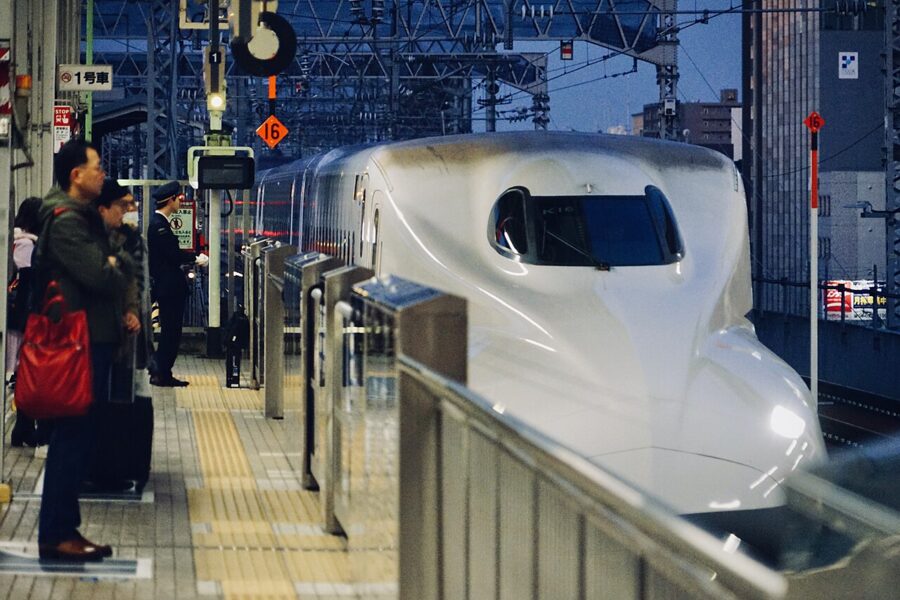
If your flight lands in Tokyo and you spend a few days there first, the Airport Limousine Bus handles the hotel transfer at that end. From Tokyo Station, the Nozomi Shinkansen reaches Shin-Osaka in about 2 hours 30 minutes. A standard reserved seat costs ¥14,720 (about $98) one way (as of November 2026). Late March falls in one of JR’s busier seasons, which adds a small surcharge to reserved seats.

Leaving at closing time
Everyone leaves at once. The halls close at 17:00, and a sold-out day puts tens of thousands of people on two small stations within the hour. The New Tram queue at Nakafuto is the worst of it.

Walk to Cosmosquare instead and board the Chuo Line, where full-size trains clear the platform quickly. If you have dinner plans in Namba, aim to be on a train by 16:15.
Inside the halls
Public days at AnimeJapan are about three things: booths, stages and goods. Pick your priority before you arrive, because the floor is too big and too crowded to do all three well in one day.
Booths and stages
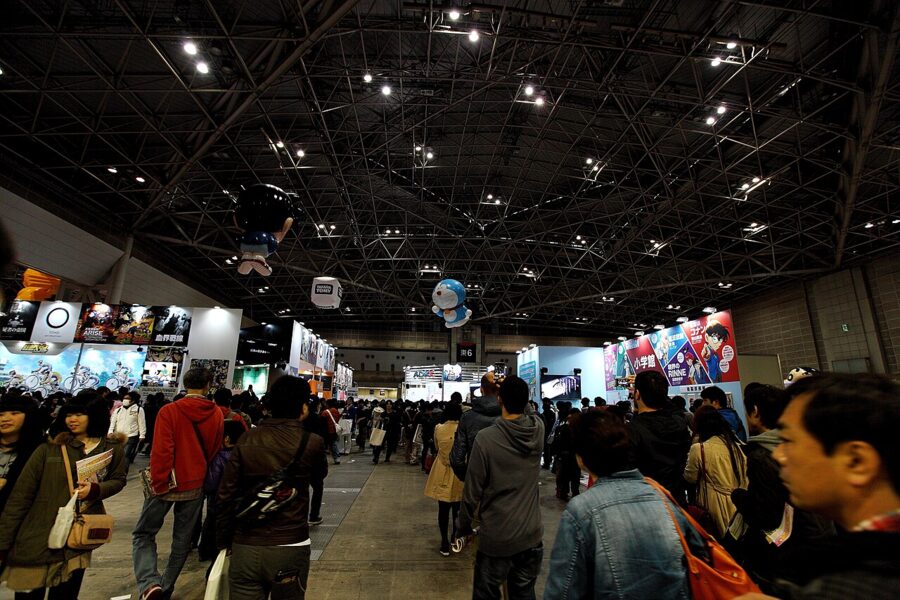
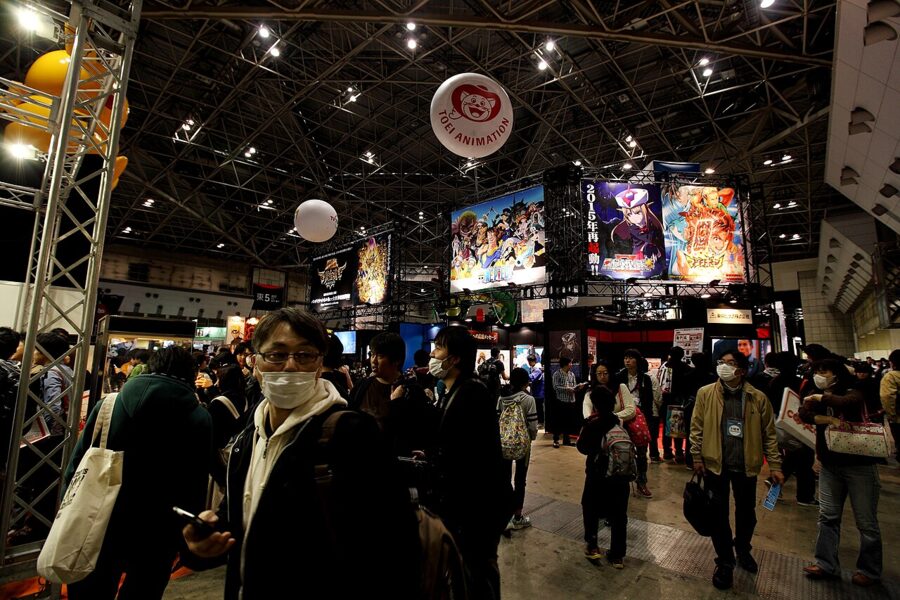
The exhibitor booths are the core. Studios, publishers, streaming services and toy makers build stands for their next season, with trailers on big screens, life-size figures and key art, photo spots and small stage shows of their own. Exhibitor lists for 2027 had not been published as of November 2026; the official site lists booths by company and by title once they are confirmed.
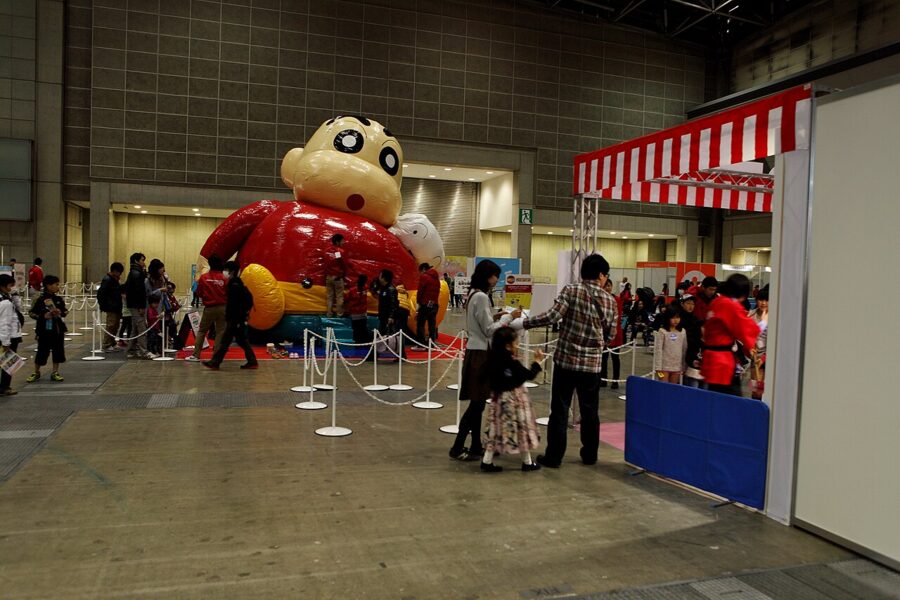

Go to the booth you care about most first, straight from the gate, and look at the floor map on the official site the night before. Lines for popular booths and goods build within the first hour and do not shrink until mid-afternoon. Photography rules vary booth by booth, so look for the signs.
Almost everything on the stages is in Japanese, with no English interpretation. If you do not speak Japanese, a standing-area panel for a series you love is still a thrill; an hour-long talk show for one you have not seen is time you could spend on the floor.
Official merchandise and what to skip
The organizer runs its own goods booth with AnimeJapan-only items. In 2026 the AJ Gacha capsule badges cost ¥500 (about $3) a pull, an acrylic stand charm ¥1,600 (about $11), and a big die-cut sticker ¥900 (about $6). The official online shop, AJ Store, has handled some lines too, which takes the pressure off the queue.
Skip the long lines for general merchandise that is not marked as an AnimeJapan exclusive (アニメジャパン限定). Most of it reaches regular anime shops within weeks, and Den Den Town is half an hour away. Spend the queue time on booth-only items and the things you came to see.
Trading goods on the floor is tolerated only if it does not block anyone, and buying or selling for money is banned outright. Staff can remove you from the venue for it, without re-entry.
Cosplay
Cosplay at AnimeJapan works on registration, not on arrival in costume. In 2026 it cost ¥1,000 (about $7) in cash at the cosplay area, which covered the changing room and cloakroom, and everyone over 6 needed to register. You still need an admission ticket on top.
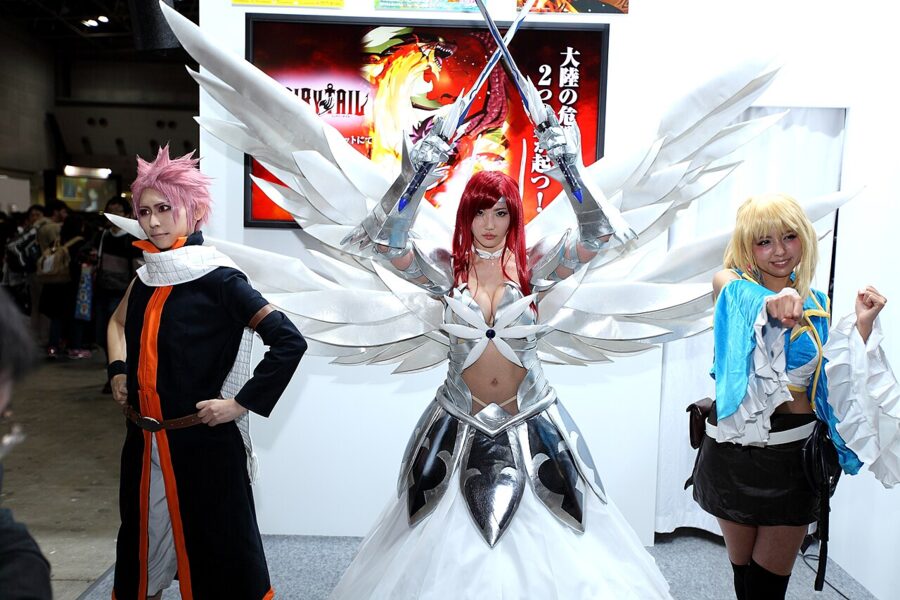

The 2026 changing rooms opened at 8:00, before the halls, and the venue had to be empty by 17:00. Taking photos of any visitor, cosplayer or not, needs their consent. The INTEX layout for 2027 has not been published, so check the official cosplay page in February.
If cosplay is your main reason to travel, Japan’s biggest cosplay event is the World Cosplay Summit in Nagoya, which moves to November 12 to 14 in 2027. AnimeJapan treats cosplay as one corner of an industry show; the summit is built around it.
Where to stay
Stay in Namba or around Hommachi, not by the venue. The bay area near INTEX has a few large hotels, but little else open in the evening, and every trip into town starts with the New Tram. Namba puts Den Den Town and Dotonbori within walking distance and the Midosuji Line at the door.
Hommachi is the practical choice: it is the change point for the Chuo Line, so your morning trip to Cosmosquare is one train of about 15 minutes. Umeda suits you if you arrive by Shinkansen and leave the same way. Book early, since late March pairs a fan weekend with the start of cherry blossom season, and Osaka hotel prices rise with both.
Pairing AnimeJapan with Osaka
The Osaka move is the best thing to happen to an AnimeJapan trip in years. In Tokyo the show competed with everything else in the city. In Osaka it sits next to a compact otaku district and an early spring.
Den Den Town
Den Den Town (でんでんタウン) is the electronics and anime district of Nipponbashi, along Sakaisuji avenue between Nippombashi and Ebisucho stations on the Sakaisuji Line. From Namba it is about 10 minutes on foot. Electronics shops line the avenue; the anime, figure, card game and second-hand goods shops cluster one block west on Ota Road (オタロード).
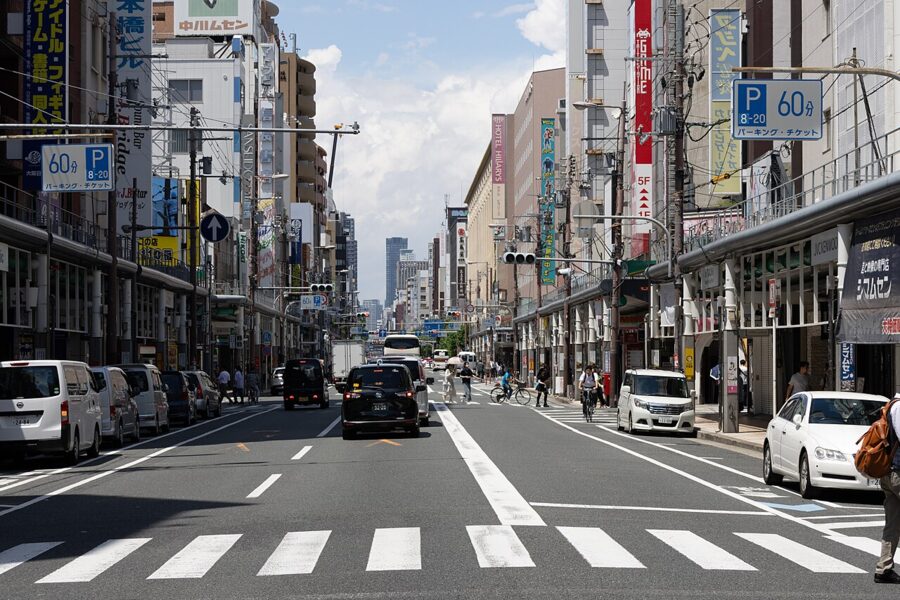

Go on the Friday before the show or the Monday after. On the show weekend itself every fan in Kansai has the same idea in the evening. Treat it as an afternoon-and-evening plan, since few shops are open early.
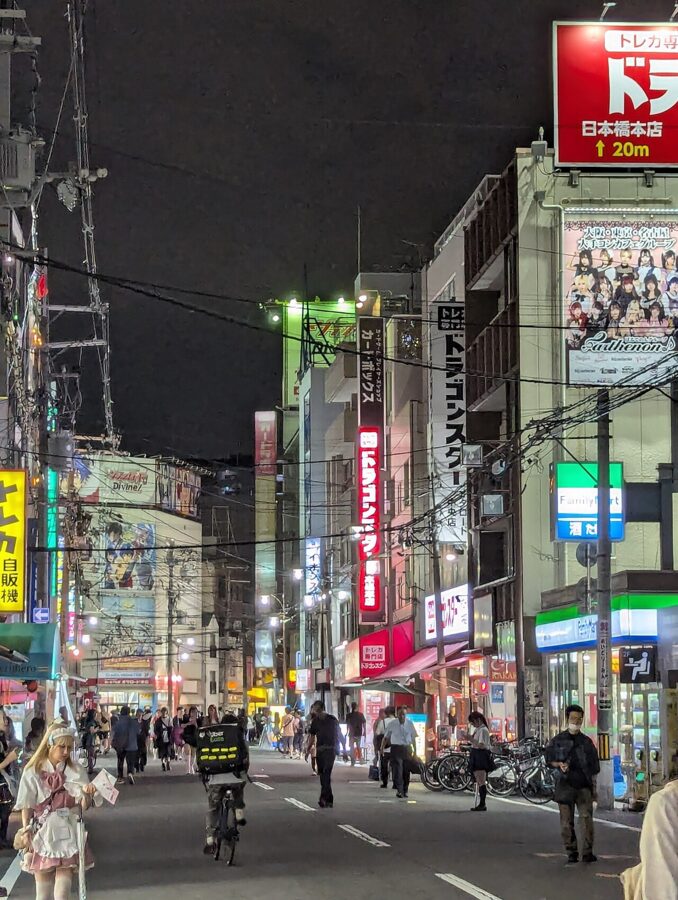

Tax-free shopping changed on November 1, 2026. Visitors now pay the full price, consumption tax included, and the tax is refunded after customs confirms at departure that the goods are leaving Japan with you. Keep your purchases in your carry-on or easy to reach, and allow time at the airport.
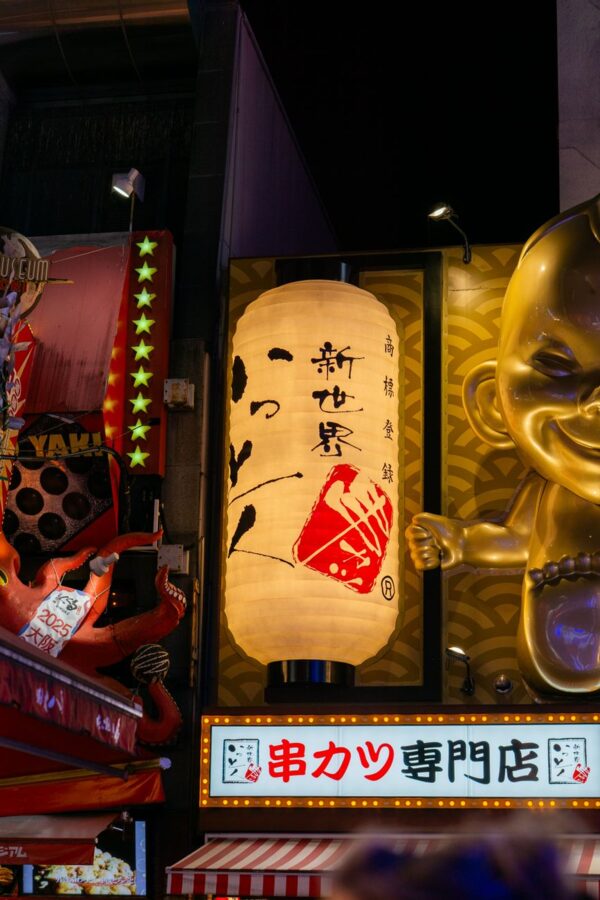
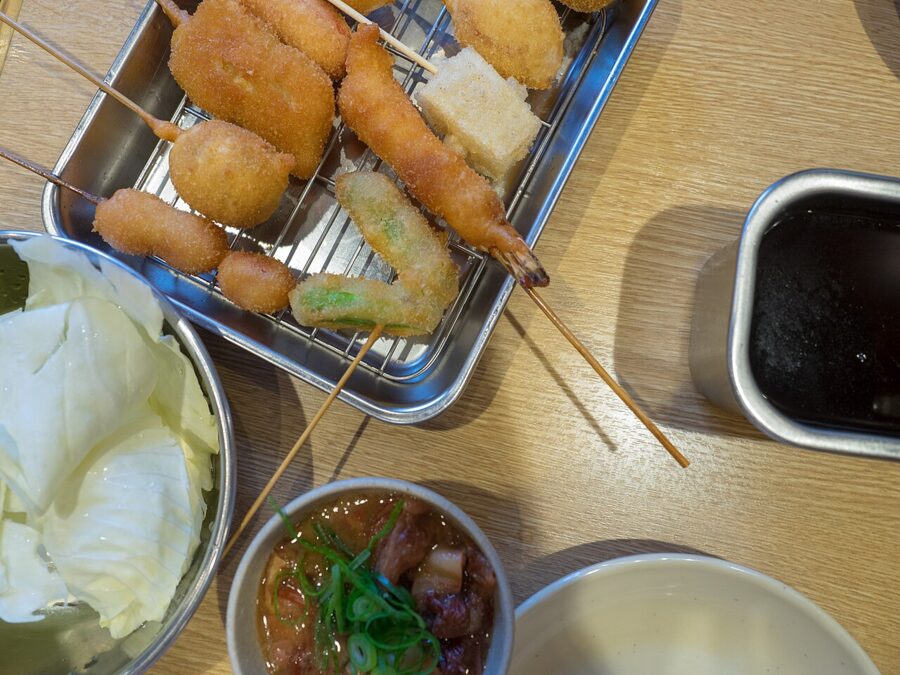
South of Den Den Town, past Ebisucho Station, is Shinsekai, the old entertainment quarter under Tsutenkaku Tower. It is where I would eat after a shopping afternoon: kushikatsu, skewers of breaded and fried meat and vegetables, at counter restaurants that stay busy into the night.

Early cherry blossoms
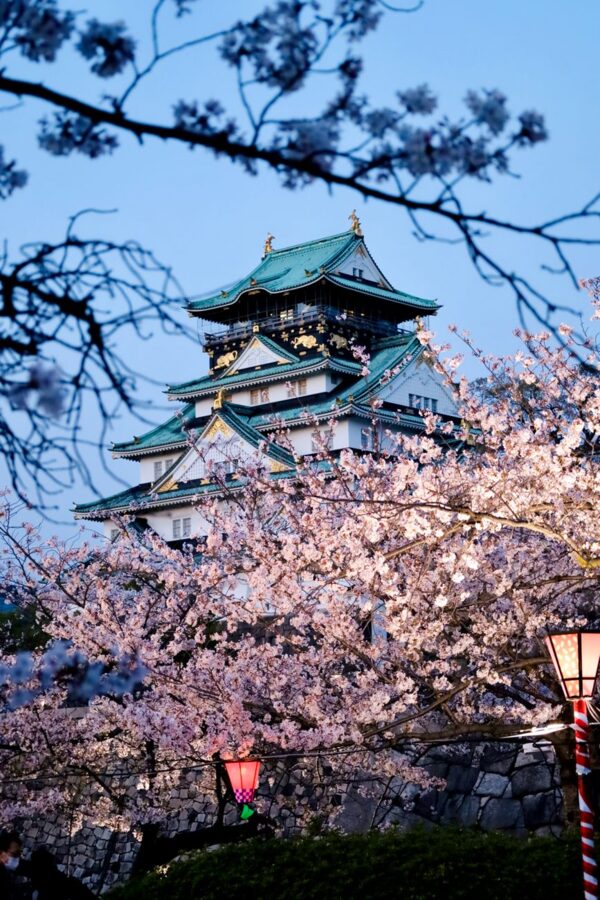
The show falls right at the start of Osaka’s cherry blossom season. The Osaka weather office declared the city’s somei-yoshino open on March 26, 2026, one day earlier than the long-term average of March 27. Its sample tree stands in the Nishinomaru Garden at Osaka Castle Park.
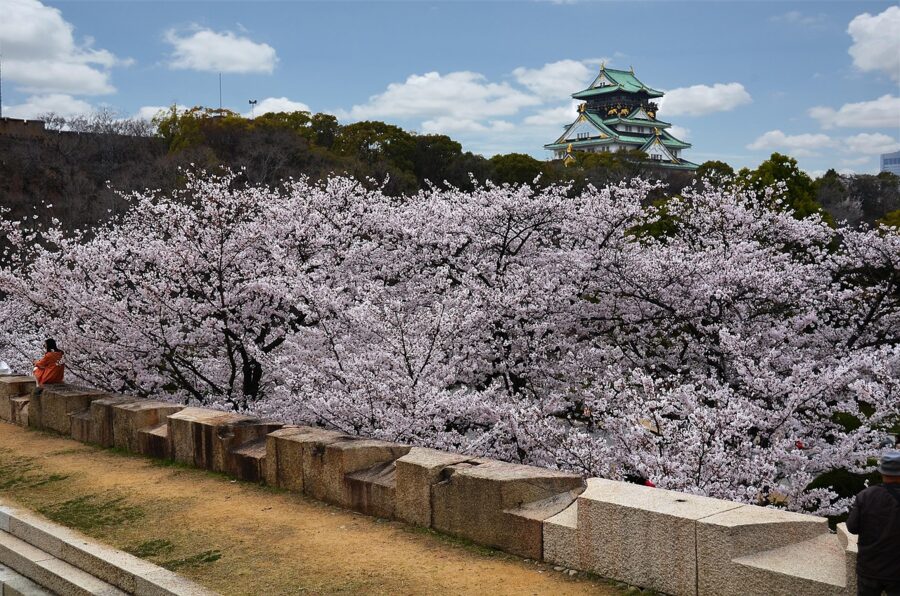
Full bloom usually follows about a week after opening, so the show weekend most often catches early flowers, not the peak. If you can add days, add them after the show, not before. A cold March pushes the season later; a warm one can bring it forward into the show weekend itself.
A longer Japan trip around it
If you want a second fan event in the same year, Tokyo Game Show runs in September at Makuhari Messe. It works on the same rule as AnimeJapan: the ticket sale, not the show, sets your plan. Osaka itself rewards an extra day, and Kyoto is about 15 minutes away by Shinkansen from Shin-Osaka for a day among the temples.
Set an alarm for mid-January and buy the lottery ticket for the day you want the moment sales open. The hotel in Namba, the Shinkansen seat and the castle walk can all be sorted on the train down.