
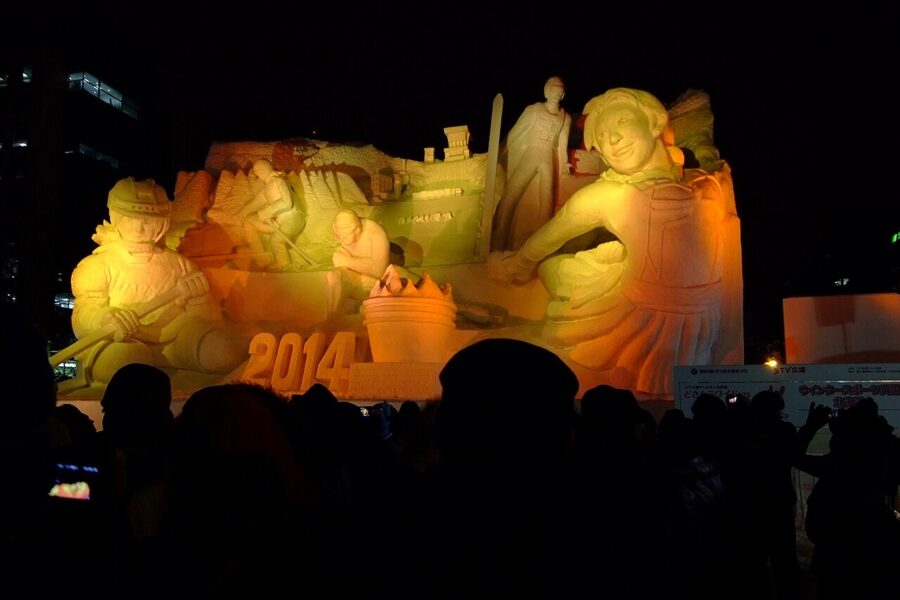
Every big snow sculpture in Odori Park is knocked down the morning after the Sapporo Snow Festival closes. The 77th festival runs from Thursday, February 4 to Thursday, February 11, 2027, so the bulldozers arrive on the 12th, and anyone who lands that day gets a park full of snow heaps. Fix your dates inside that window first, book the room second, and everything else can be sorted once you are there.
Entry is free at all three sites: Odori Park for the building-sized snow sculptures, Susukino for the ice, and Tsudome for slides and snow play on the edge of town. For most people I would plan three nights in central Sapporo inside the festival dates, plus a fourth for an evening in Otaru or a day on skis. Fares, opening hours and dates below are as of November 2026.


On this page
The 2027 dates and how the week runs
All three sites share the same eight days in 2027, February 4 to 11, according to the Sapporo Snow Festival executive committee. February 11 is National Foundation Day, a public holiday, so the final Thursday is busy with local families. The weekend of February 6 and 7 is the crush: Lunar New Year falls on Saturday, February 6, 2027, and in 2026 the one fine Saturday packed the park.
If you can choose, go Thursday to Saturday morning at the start, or Monday to Wednesday, February 8 to 10. The opening days have the freshest snow and the sharpest ice. By the final days, a warm spell can soften edges and cloud the ice.
The organizers publish the 2027 sculpture lineup and event timetable from mid-December 2026, so nobody can tell you yet which castles and anime characters are coming. What is fixed is the outline: five large sculptures in Odori Park, winter attractions at 1-chome, medium and small sculptures through the middle of the park, and the International Snow Sculpture Contest at 11-chome. The 2-chome plaza goes to the Sapporo International Art Festival, a three-yearly art show that runs across the city from January 16 to February 21, 2027.
The festival also has a new look. The committee has rebranded it around the idea of “Blessed by the Snow”, a thank-you to the snow that most residents spend the winter shoveling, with a new logo and a round white mascot called Saporon.
Missed the dates by a day? The Sapporo Snow Sports Park, the festival’s partner event, runs from February 12 to 14, 2027 at the Daiwa House Premist Dome, the former Sapporo Dome. In 2026 its outdoor site was free to enter from 10:00 to 16:30, with taster sessions in curling, biathlon shooting and cross-country skiing, some of them paid.
February elsewhere in Japan means cheap rooms, plum blossom around Tokyo and deep powder in the mountains. The guide to the best time to visit Japan sets the month against the rest of the year if you are still choosing.
The three sites at a glance
The sites do different jobs, and you need all three only if you have children or a full week. Hours below are the organizers’ standing hours; the counts are from the 2026 festival.
| Site | What it is for | Hours | Nearest station |
|---|---|---|---|
| Odori Park (West 1 to West 11-chome) | The five large snow sculptures, 135 sculptures in all in 2026, projection shows, the international contest | Open all day; lit until 22:00 | Odori (Namboku, Tozai and Toho lines) |
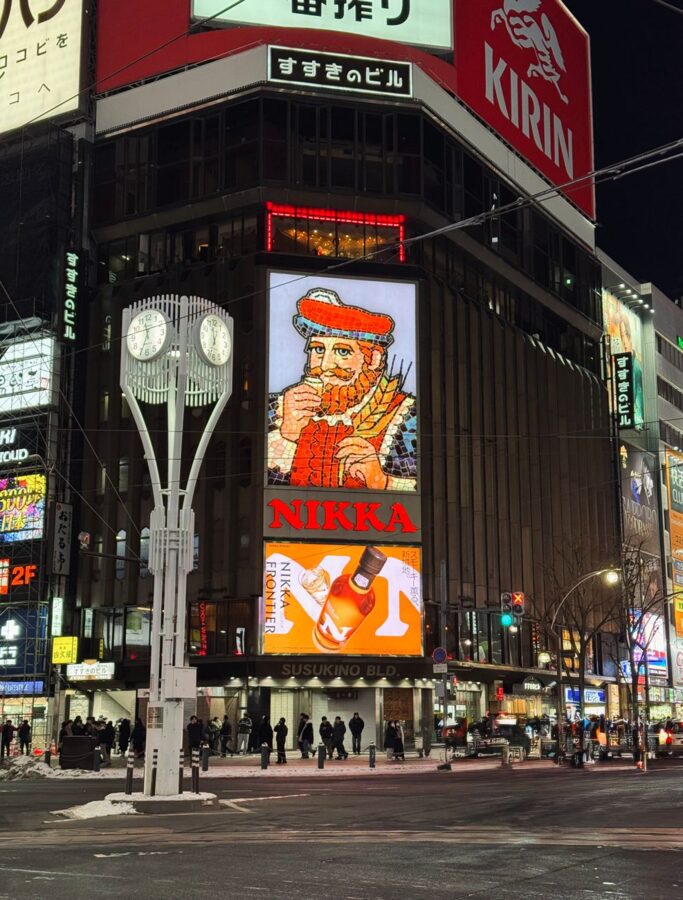
| Susukino (Ekimae-dori, South 4 to South 6) | About 60 ice sculptures, fish frozen in ice, the ice carving contest | Open all day; lit until 23:00 (22:00 on the last night) | Susukino (Namboku Line) |
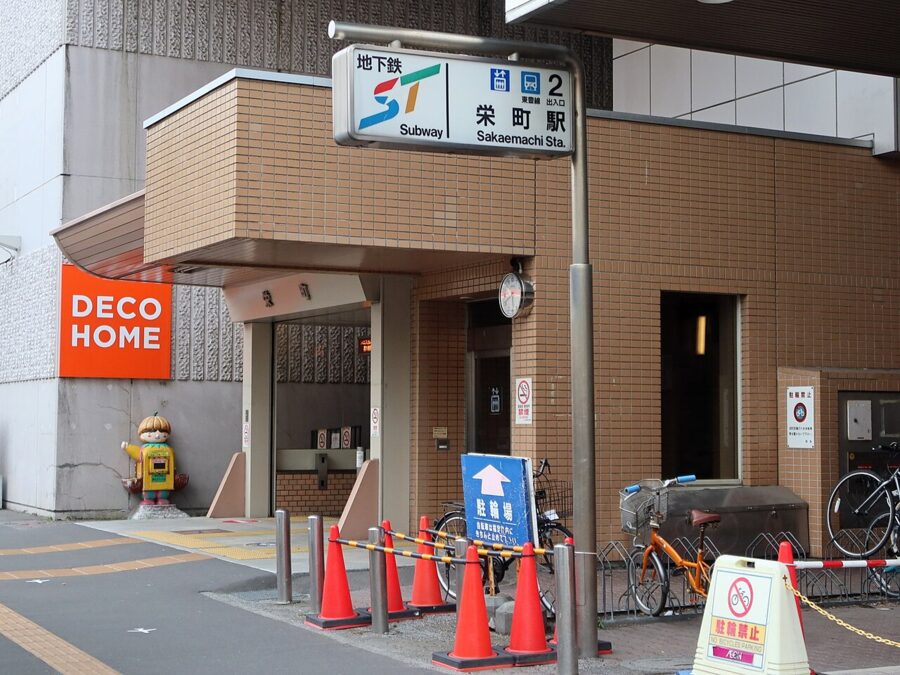
| Tsudome (Higashi-ku) | Tube slides, snow rafting, indoor play and food | 10:00 to 16:00 | Sakaemachi (Toho Line), then a shuttle bus or a 15-minute walk |
Odori Park: the big sculptures
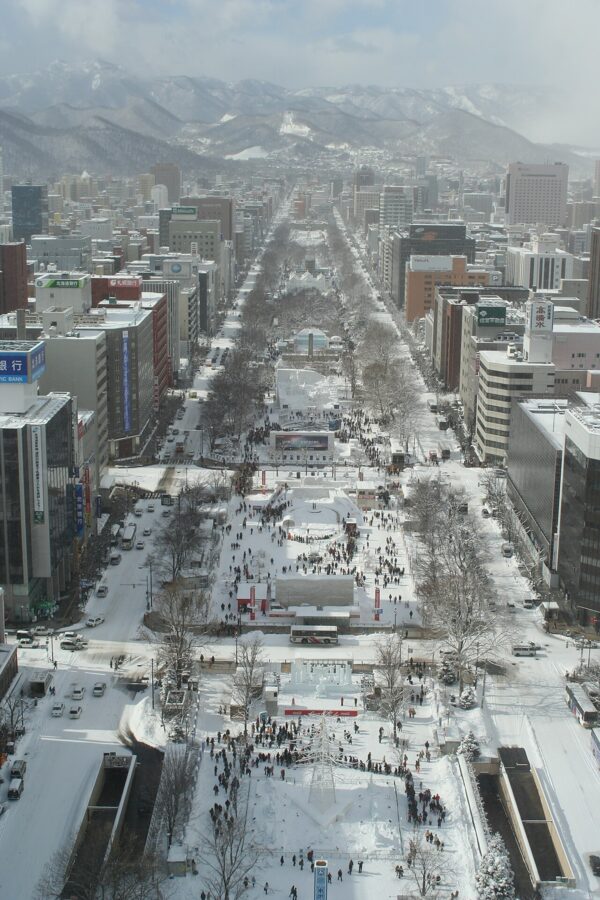
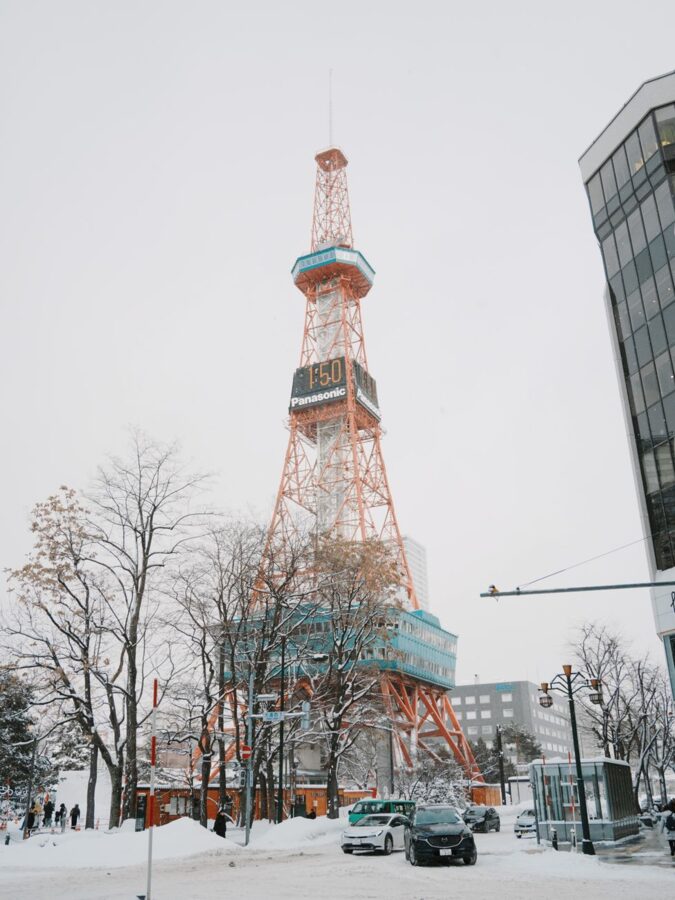
Odori Park is a long strip of green that crosses the middle of Sapporo from east to west. The festival fills it from West 1-chome, under the TV Tower, to West 11-chome, about 1.1 kilometers. Walking it end to end with stops takes most of an afternoon.
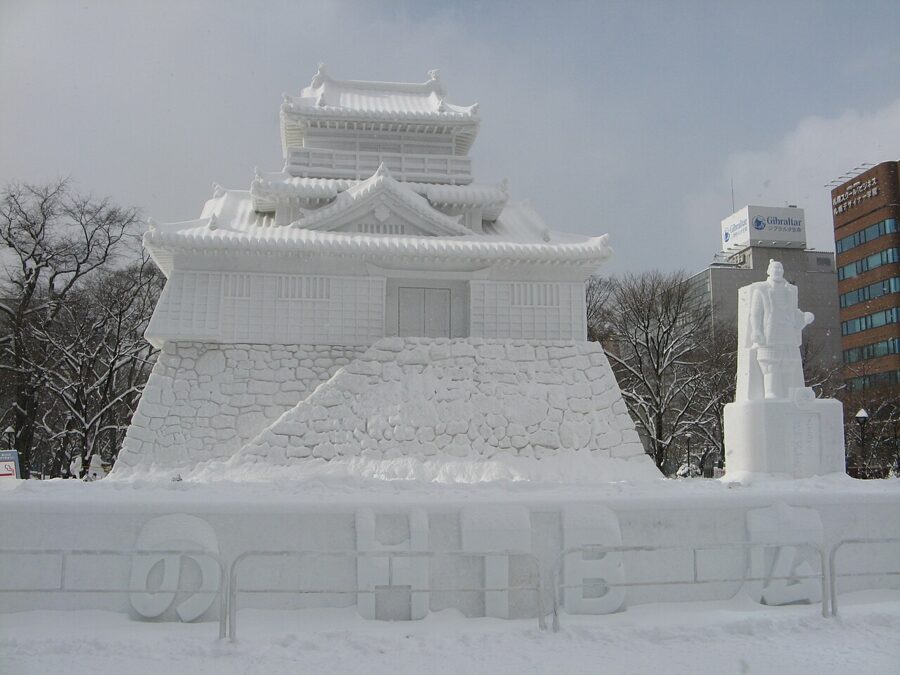
The five large sculptures are the reason the festival is famous. In 2026 the 4-chome plaza carried a 13-meter copy of Kakku, the hollow clay figure from the Jomon period that is Hokkaido’s only national treasure. The 7-chome plaza rebuilt the Furukawa Hall of Hokkaido University for the school’s 150th anniversary, and 10-chome went to Star Wars for the new Mandalorian film.
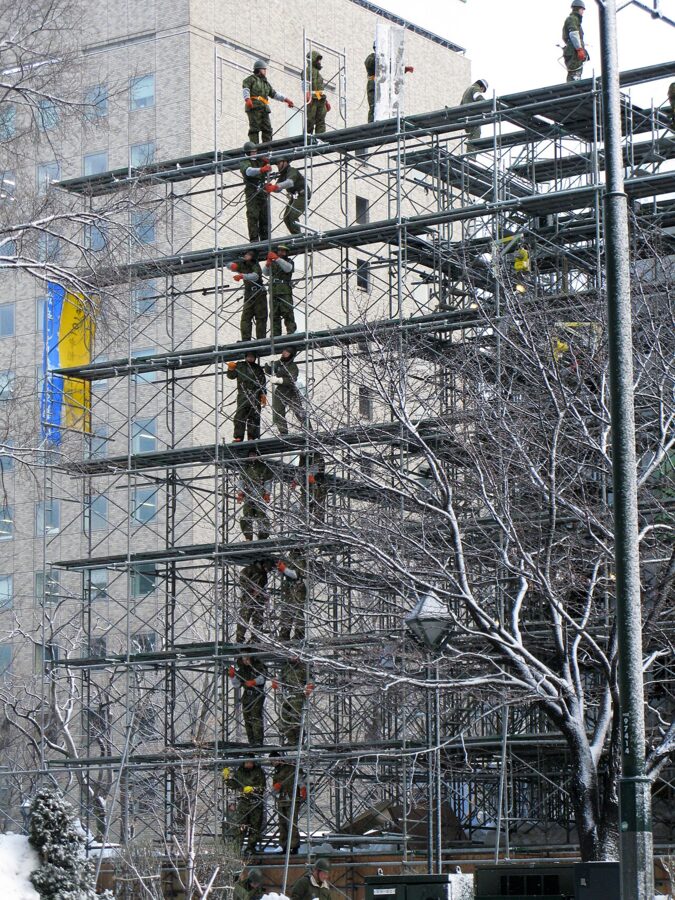

Soldiers have been building them since 1955, when the Ground Self-Defense Force put up a 10-meter statue of the Virgin Mary at 4-chome. Snow hauling starts with a ceremony on January 7 and runs for about two weeks, with Self-Defense Force trucks bringing clean snow from fields around the city such as Satoland and Moerenuma Park. Plowed street snow is never used: grit inside a block soaks up sunlight, the snow rots from within, and sculptures collapse.
The whole festival takes about 3,000 ten-ton truckloads of snow, Tsudome’s slides included. The day after closing, heavy machinery levels it all, partly for safety and partly so the park can thaw in time for spring.

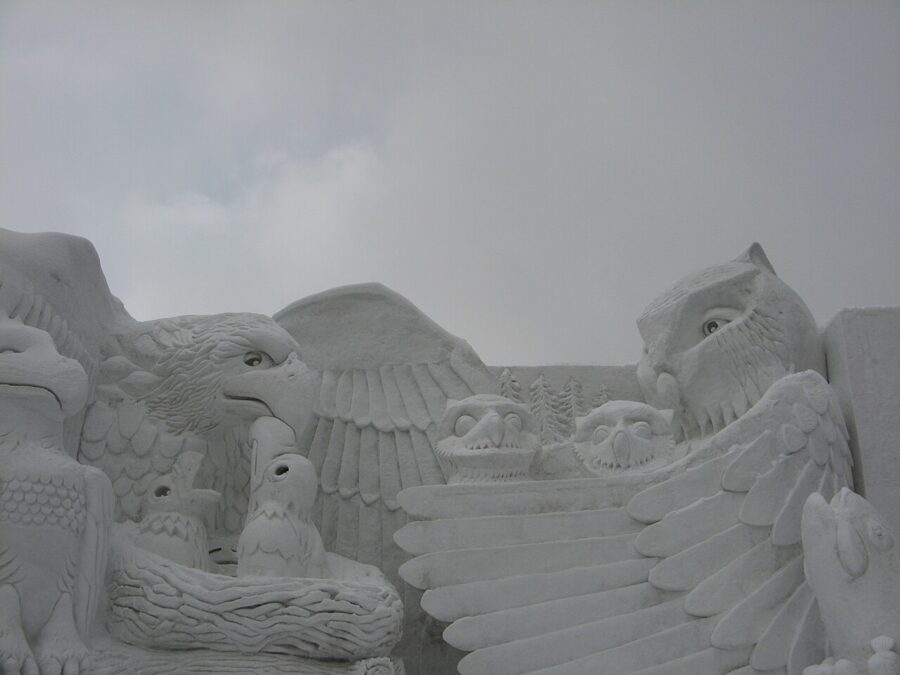
Between the giants sit the medium and small sculptures, and this is where fans get their money’s worth for free. The 2026 lineup included Blue Archive, Gundam, Oshi no Ko and Re:Zero, and Snow Miku, the winter version of Hatsune Miku who serves as a Sapporo tourism ambassador, has had a sculpture every year since 2010. If you have come for her, the life-size Snow Miku statue that stood in the snow festival museum moved on October 27, 2026 to the Lumiere shop in Pole Town, the underground mall below Ekimae-dori.
The citizen sculptures are my favorite part. Local groups win a slot in a lottery, take a technical course and build one each; there were 79 of them in 2026, voted on through the festival’s official app. They are small, often silly and usually about whatever was in the news that year.
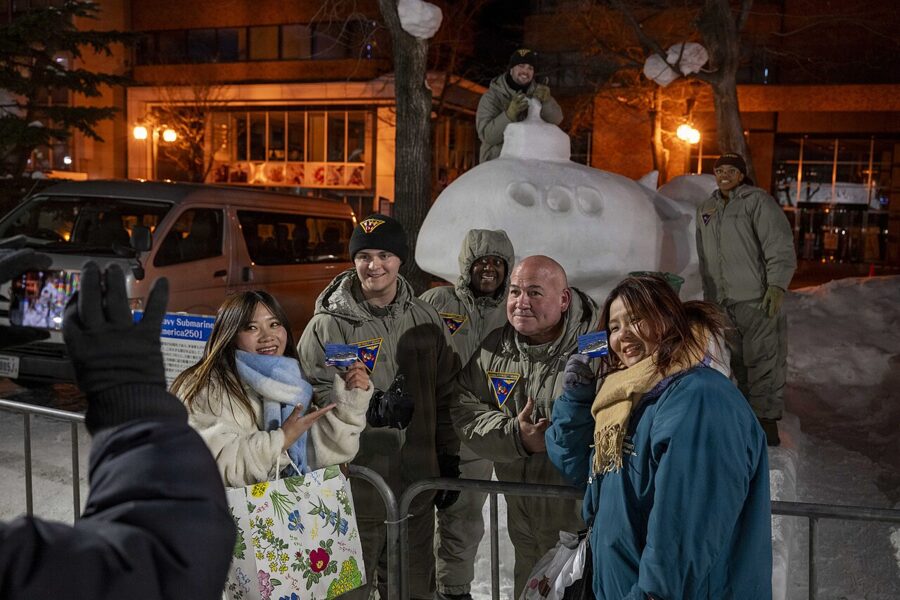
The International Snow Sculpture Contest at 11-chome is the best free show of the week if you come early. In 2026, ten teams from Finland, Mongolia, Indonesia, Thailand, Hawaii and other places carved from February 3 to 6, and visitors could watch from the 4th. Finland won. If the 2027 schedule follows the same pattern, the first three days are the time to see blocks turn into sculptures in front of you.
Food stalls line the park, and many are tied to a plaza. In 2026 a stall under the Tsuruga Castle sculpture poured sake from Aizu, and 10-chome sold cup noodles made at the factory in Chitose. Eat at the stalls at lunch, then save dinner for Susukino.
Want to help build one? The committee recruits volunteers for the large sculptures at 7-chome and 10-chome every November, and the 2027 call closes on November 30, 2026. Applicants need everyday conversational Japanese, and there is no pay, meal or travel allowance; the general guide to volunteering in Japan covers schemes with fewer strings.
Susukino: the ice strip
Susukino is Sapporo’s nightlife district, one subway stop south of Odori. Its part of the festival, run as Susukino Ice World, lines Ekimae-dori, the main avenue, from South 4 to South 6. That is a compact strip: in 2026 the organizers cut it to about two-thirds of its former scale, and the 60 ice sculptures still drew 1,378,000 visits.
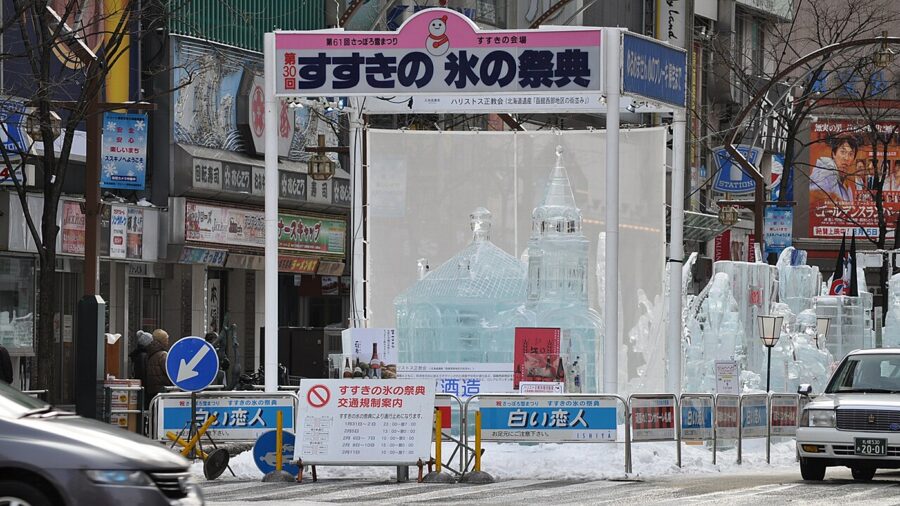

Ice is a different art from snow. The sculptures are carved by about 200 chefs and professional ice carvers who work for three days and nights before the opening; they prefer nights below minus 10°C, and use dry ice to chill the blocks when it turns mild. The favorites are the fish frozen inside clear blocks, and the contest pieces in which carvers from around Japan compete in fine detail.
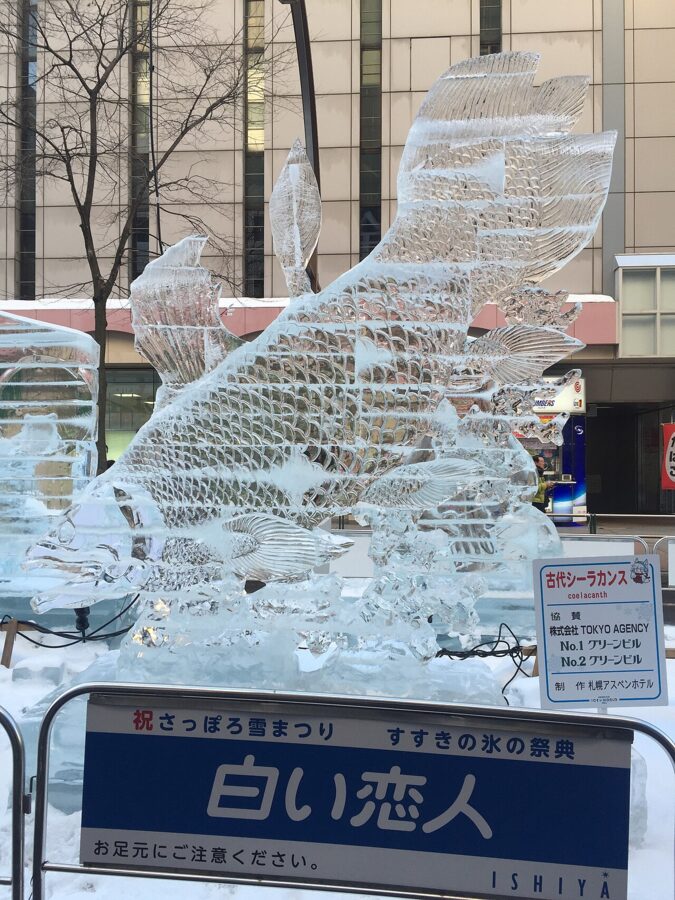

The avenue closes to traffic for part of each day so you can walk among the ice. In 2026 that was 15:00 to 23:00 on weekdays, 10:00 to 23:00 at the weekend and 10:00 to 22:00 on the last day; expect similar hours in 2027. In 2026 the contest carvers worked through the opening night, from 14:30 on February 4 to 10:30 the next morning, which is worth a detour after dinner if the pattern holds.
Go at night, and go early in the week. Ice in daylight looks like wet glass; at night the lights pick out every cut. Warm days are the risk: in 2026 the mild opening day turned many sculptures cloudy, and one fell over on the night of February 10.
Tsudome: the snow playground
Tsudome is the Sapporo Community Dome, a sports hall in Higashi-ku, the city’s northeast. It is open from 10:00 to 16:00, some rides close early when the queues get long, and there is no parking or drop-off. Hats and gloves are required for the outdoor attractions.
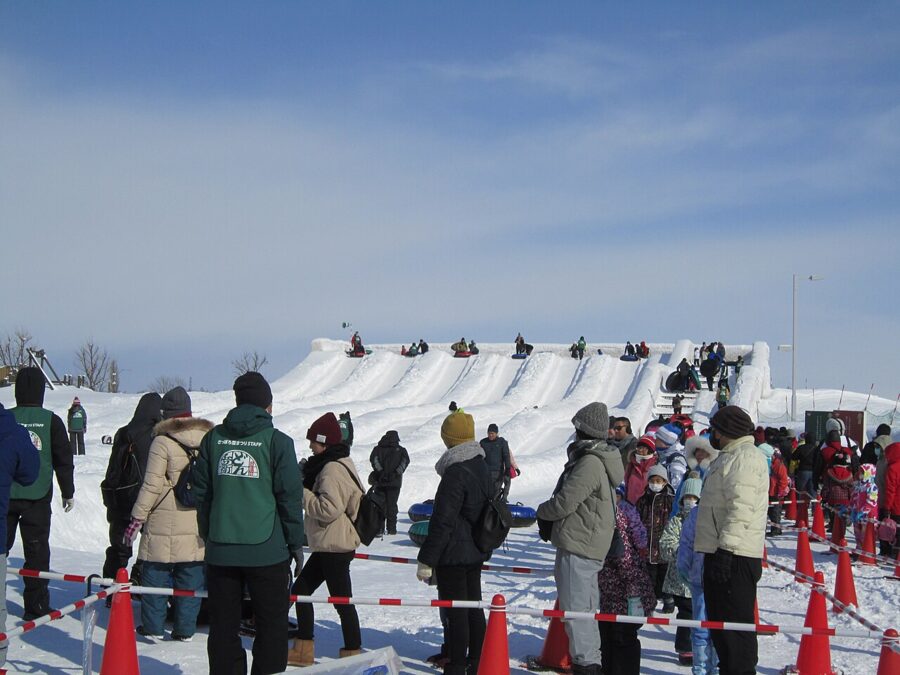

Outside, the 2026 site had the tube slider, a two-person family slider, a sled slope with sleds to borrow, snow mazes and snow rafting behind a snowmobile at ¥1,200 (about $8) for adults and ¥600 (about $4) for children. Inside the dome, a paid play zone ran on points at ¥130 (under $1) each and included a 12-meter slide, and a food hall sold ramen and parfaits. A luggage room took bags for ¥300 (about $2) each until 15:00.
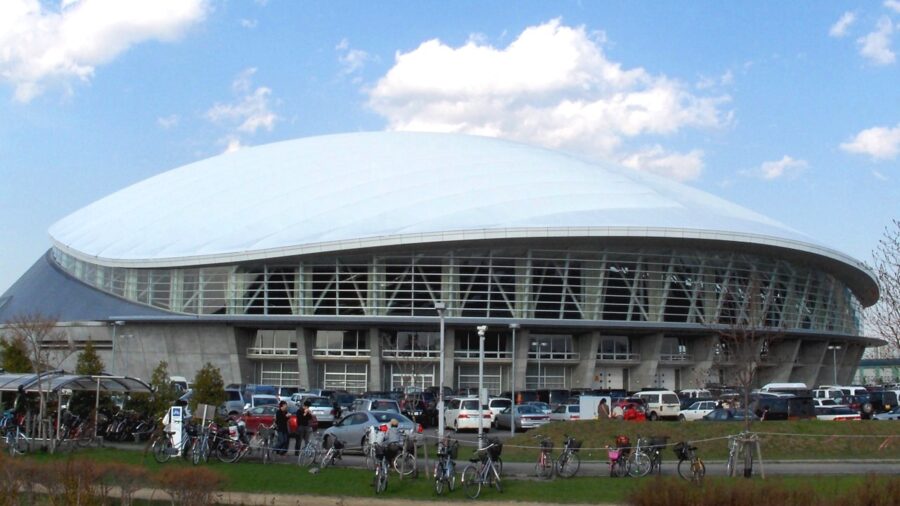

With children, Tsudome is the best morning of the trip, and in 2026 it drew 613,000 visits. Without them, I would skip it on a three-day visit and spend the time in Otaru instead.
Day or night: when to see what
Odori needs two visits, one in daylight and one after dark. By day you see the carving and the scale, and the TV Tower view is clearest. After dark the large sculptures are lit until 22:00, and in 2026 the projection shows at 5-chome and 8-chome began at 17:30 each evening.
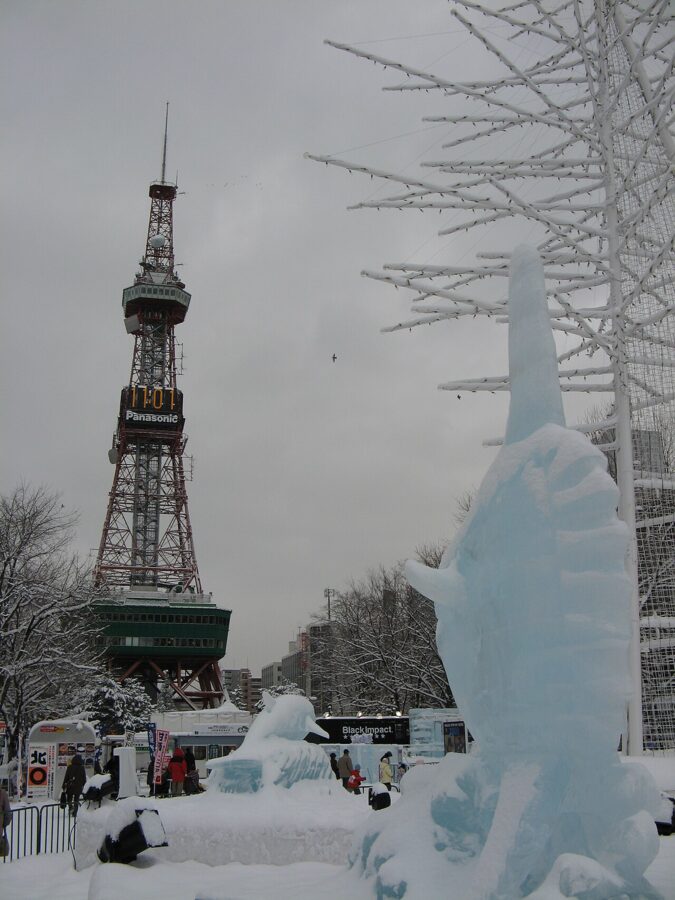

Susukino is a night site, and Tsudome is a day site. That makes the simplest plan a late afternoon at Odori working east from 11-chome, the tower at dusk, then the ten-minute walk south down Ekimae-dori to the ice and dinner in Susukino. Weekday mornings at Odori should be the quietest time of the whole festival.
Getting to Sapporo
Flying into New Chitose
Almost everyone flies. New Chitose Airport is the gateway for Sapporo, with domestic flights from Tokyo’s Haneda and Narita and international routes across Asia and beyond; if you start in central Tokyo, the Airport Limousine Bus covers the airport transfer from many hotel doors.
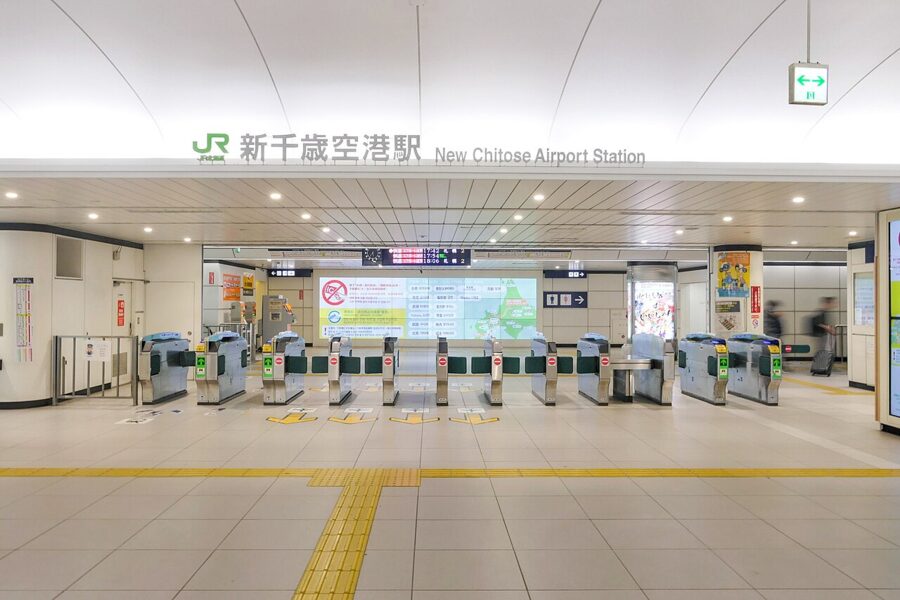
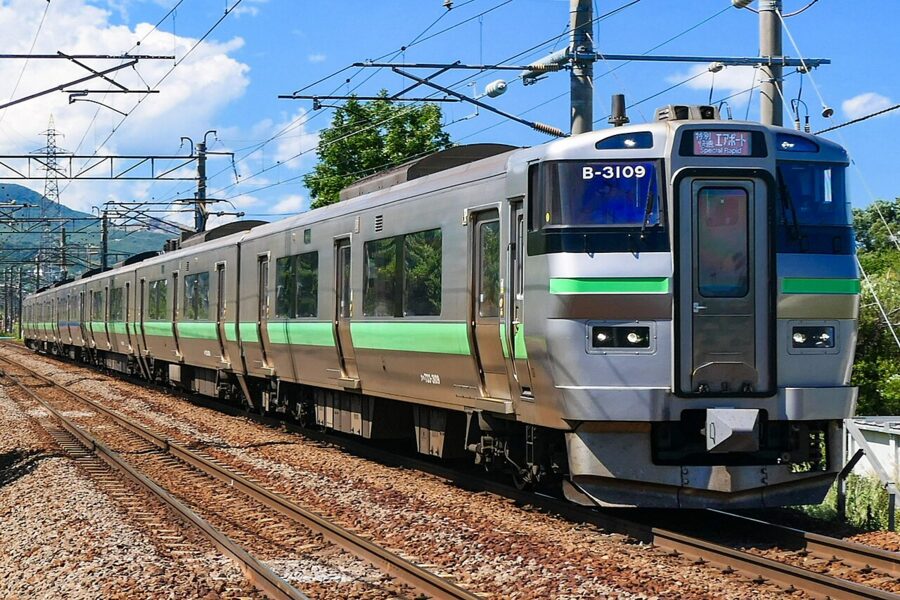
From the airport, take the train. JR Hokkaido runs six Airport trains an hour between 09:00 and 16:00, taking 37 minutes at best to Sapporo on the Rapid and 33 minutes on the Special Rapid. The fare is ¥1,230 (about $8) as of November 2026, and an IC card like Suica works at the gates.
A reserved u-seat costs ¥1,000 (about $7) on top, or ¥800 (about $5) booked online, and I would pay it with big luggage on a festival weekend. The airport buses to central Sapporo take about 70 minutes, which only makes sense if one stops at your hotel door.
Shinkansen plus limited express
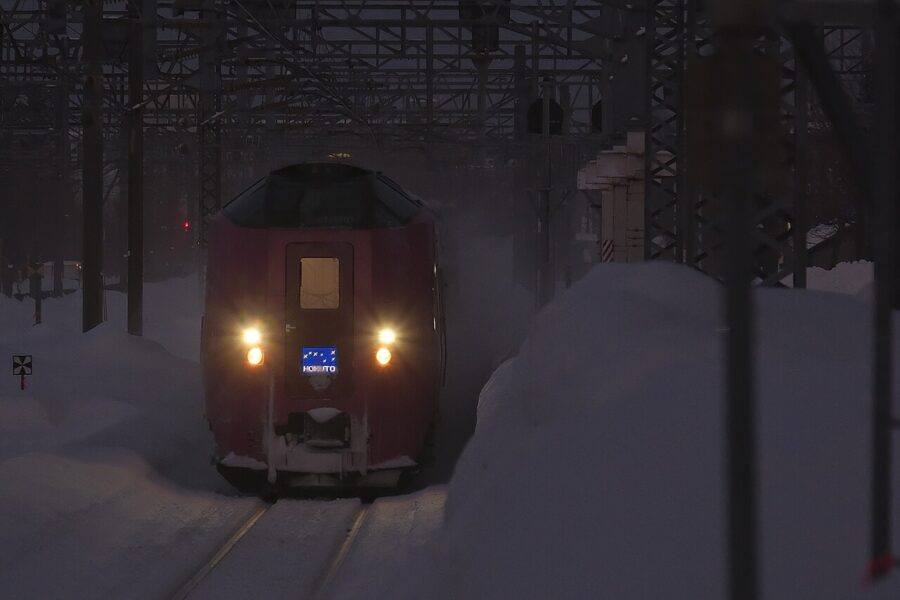
The Shinkansen does not reach Sapporo yet. The fastest Hayabusa from Tokyo takes just under four hours to Shin-Hakodate-Hokuto, and the Hokuto limited express then needs another 3 hours 30 minutes to 3 hours 40 minutes to Sapporo. Allow eight hours or more with the change.
Every seat on JR Hokkaido’s limited expresses is reserved, so book the Hokuto seat when you book the Shinkansen. The 7-day Japan Rail Pass at ¥50,000 (about $330) covers both trains. I would take the train only with that pass already in hand, or with a night in Hakodate to break the trip; otherwise, fly.

Getting between the sites
Central Sapporo is laid out on a grid, and Odori Park is the line the numbering starts from. From Sapporo Station, Odori is one stop on the Namboku or Toho subway line, or about 15 minutes on foot through the underground walkway under Ekimae-dori, out of the wind.

Odori to Susukino is one stop on the Namboku Line, but it is just as quick to walk south down Ekimae-dori. Tsudome is the awkward one: take the Toho Line to Sakaemachi at the end of the line, then a shuttle bus or a 15-minute walk. The 2027 shuttle times and fare were not out in November 2026, so check before you rely on the bus.

For the Snow Sports Park after the festival, ride the Toho Line south to Fukuzumi Station for the Premist Dome.
Where to stay, and when to book
Over eight days in 2026, Odori and Tsudome counted 2,539,000 visits and Susukino another 1,378,000. Rooms inside the festival dates go early, and the Friday and Saturday nights of February 5 and 6 go first. Book a refundable room as early as you can and keep checking for something better.
Odori is where I would stay: you can walk to both night sites and drop shopping at the hotel between them. Around Sapporo Station is the practical second choice, with the airport train at the door, the Toho Line straight to Tsudome and the underground walk to Odori. Susukino is closest to the ice and the restaurants, but it is loud until late.
Nakajima Koen, one stop south of Susukino on the Namboku Line, is quieter and still walkable to the ice. If central Sapporo is full, look at Otaru, 33 to 46 minutes away by JR, or at Chitose, where most Airport trains also stop. Either is better than a far-out room that needs a bus.
What to wear in February
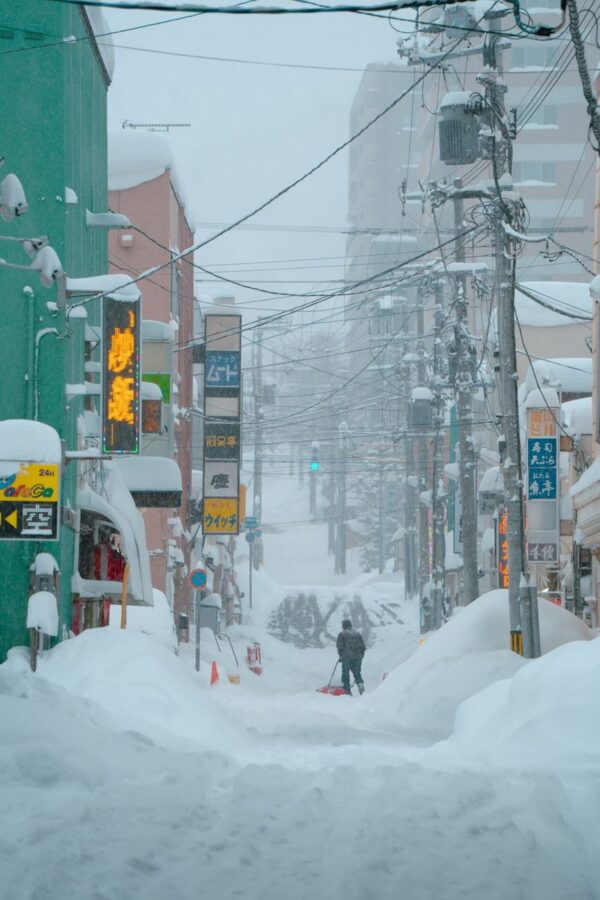
Sapporo’s normal February high is 0.4°C (33°F) and the normal low is minus 6.2°C (21°F), on the Japan Meteorological Agency’s 1991 to 2020 averages. Late January and early February are the coldest weeks of the year, and you will stand still outside for hours. It is the standing, not the temperature, that gets to people.
The organizers’ own advice is layers under a proper winter coat, plus a hat, ear covers and gloves. My list:
- A thermal base layer and a sweater under a coat that covers your hips; a thin city coat is not enough.
- Boots with deep tread. If yours are smooth, strap-on cleats cost about ¥1,000 (about $7) at the official shop at Odori, convenience stores and station kiosks; the official shop also lends walking poles free.
- A hat that covers your ears, and gloves you can keep on; Tsudome’s rides require both.
- Stick-on hand warmers (kairo) from any convenience store, and a spare phone battery, because cold drains them fast.
Snow also stops things. In 2026 heavy snow on February 6 and 8 thinned the crowds at Odori, and flights and trains are cut on the worst days. Keep a spare day before an international flight home.
Pairing the festival with Otaru, skiing and Asahikawa
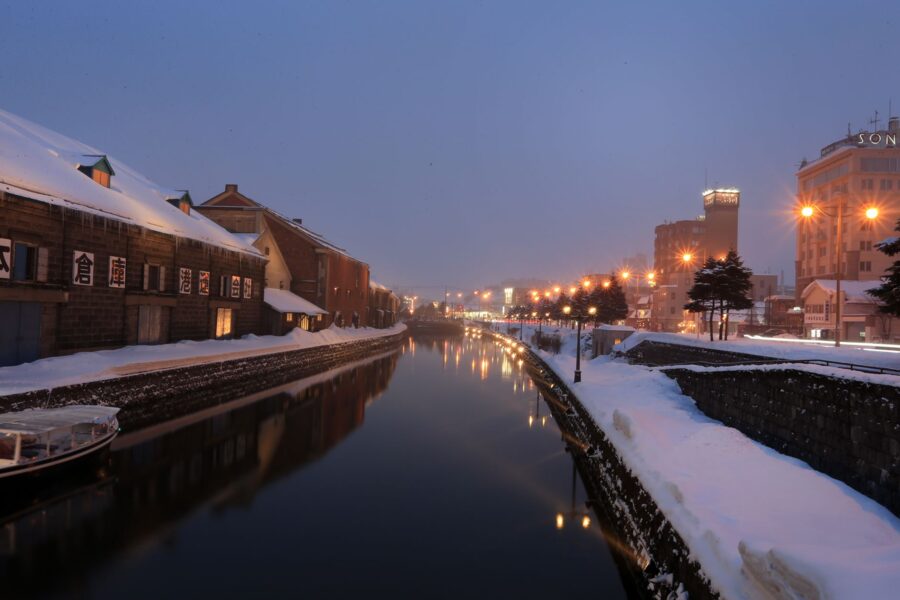
Otaru Snow Light Path
Otaru is a port town 33 to 46 minutes from Sapporo by JR, and its own winter festival lines up with Sapporo’s. The Otaru Snow Light Path, Yuki Akari no Michi, fills the canal and the old Temiya railway line with candles set in snow. The 2027 dates are February 6 to 13; confirm them with the local organizers before you go.
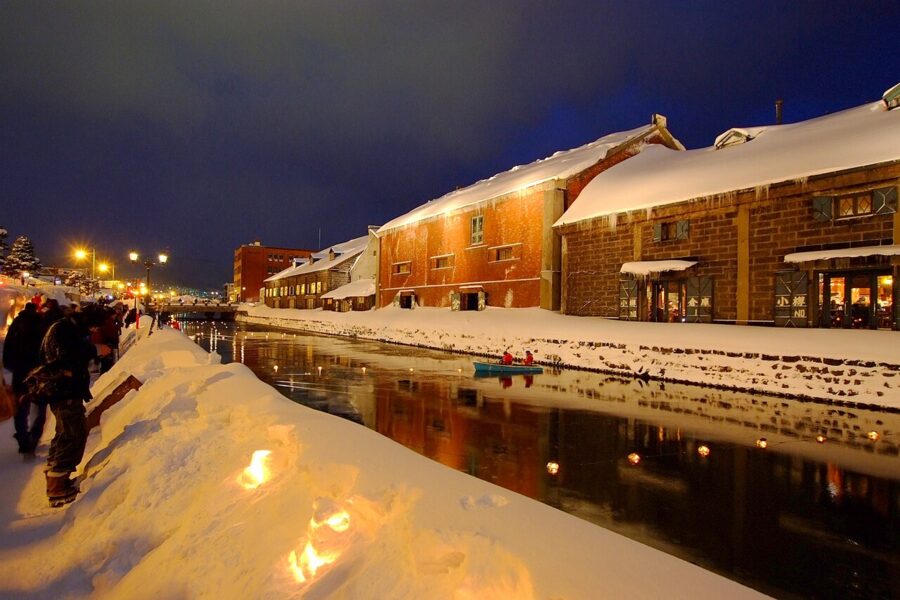

It began in 1999 and takes its name from a collection of poems by Sei Ito, a writer with deep roots in Otaru, and local and overseas volunteers set out the candles. Take an afternoon train, walk ten minutes from Otaru Station to the canal at dusk, eat sushi in town, and be back in Sapporo for the late Susukino ice. That leaves the next morning free.
Teine or Niseko for a ski day
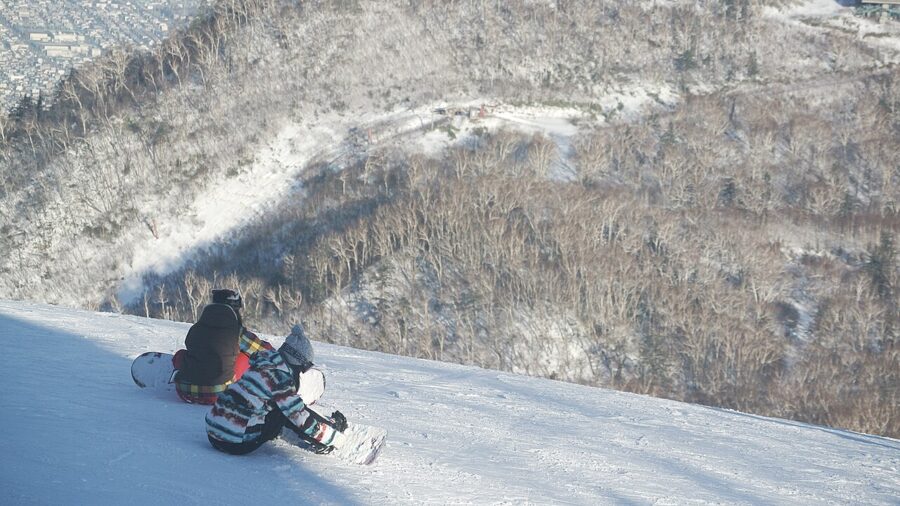
Sapporo Teine is the easy choice: it sits inside the city, about 40 minutes by car from the center. By public transport, take JR to Teine Station, then a JR Hokkaido Bus from the south exit, 16 minutes to the slopes. The mountain hosted alpine events at the 1972 Winter Olympics, and it splits into the lower Olympia zone and the Highland zone near the summit.

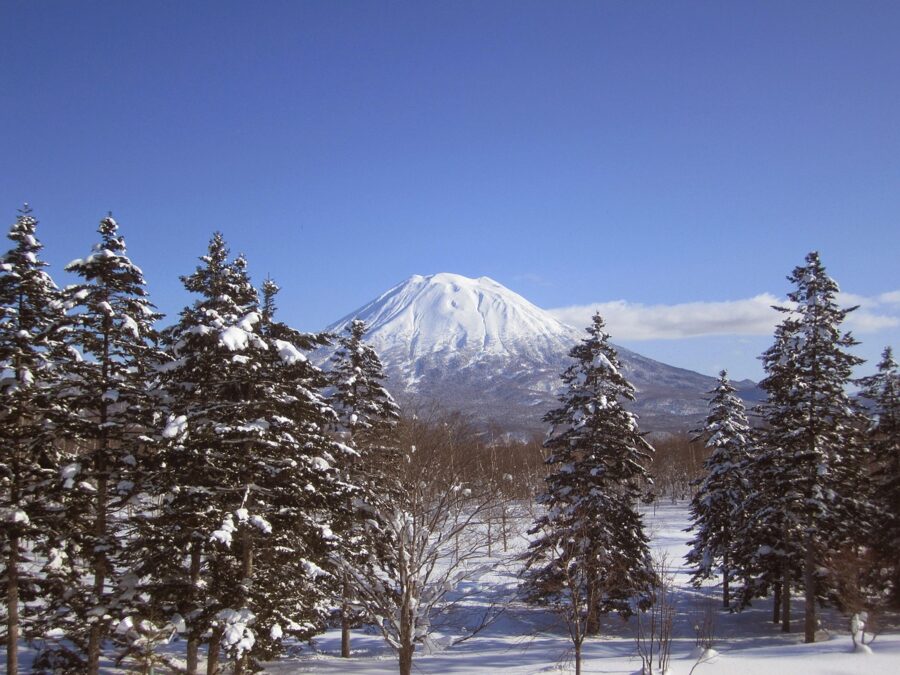
Niseko is the world-famous one, and it is too far for a day. The Chuo Bus from Sapporo Station took about three hours to Hirafu in the 2025-26 season, and JR takes two to two and a half hours to Niseko Station. Make Niseko a separate stay of two nights or more after the festival, not a side trip from it.
Asahikawa Winter Festival
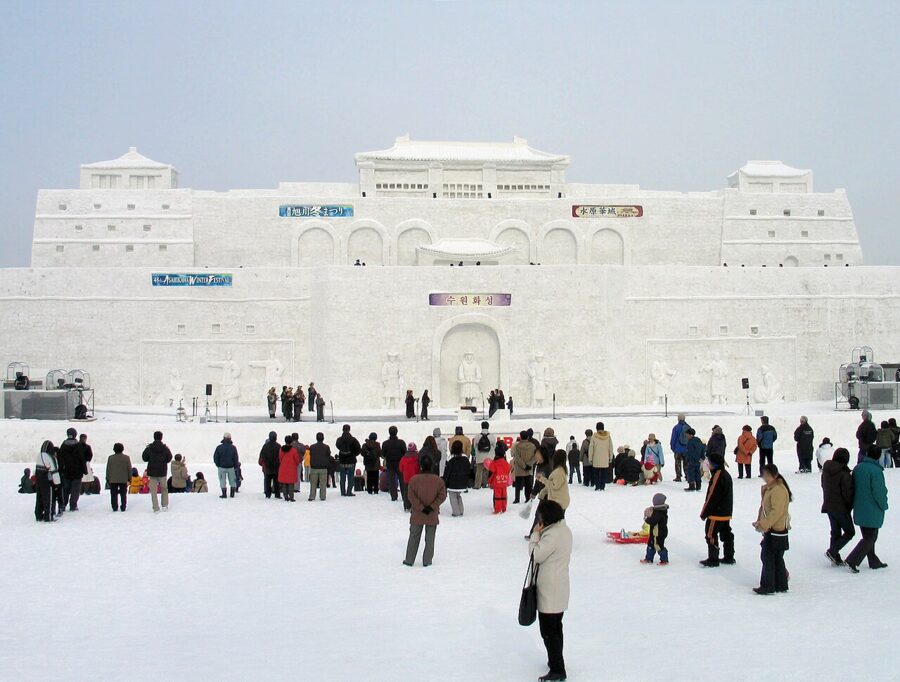
The 68th Asahikawa Winter Festival runs from February 6 to 11, 2027, in Tokiwa Park and on the Ishikari River bank by Asahibashi bridge. Its main snow sculpture is about 140 meters wide and 20 meters high, which makes the Odori giants look modest. The Kamui and Lilac limited expresses take about 1 hour 25 minutes from Sapporo.

If you hold a non-Japanese passport, the JR Hokkaido Sapporo-Furano Area Pass is the one to look at. It costs ¥11,000 (about $73) bought in advance for four consecutive days, and it covers New Chitose Airport, Otaru and Asahikawa, so the airport run and both side trips fit inside one pass.
How many days to give it
Three nights covers the festival, and four lets you add one trip out. Seven days is not too long if you split them: three nights in Sapporo, then Niseko or a night in Asahikawa. This is the four-night version I would book:
- Day 1: land at New Chitose, train to Sapporo, Odori after dark, then the ice and dinner in Susukino.
- Day 2: Odori by daylight from 11-chome eastward, the international contest, and the TV Tower at dusk.
- Day 3: Tsudome at 10:00 if you have children, or a slow morning if not; Otaru Snow Light Path in the evening.
- Day 4: skiing at Teine or the train to Asahikawa, then a last evening at Odori.
- Day 5: fly home, with the cold-weather buffer before any long-haul connection.
Fans with a spare afternoon can also take in the Sapporo Snow Festival Museum, the festival’s own small museum inside Sapporo Hitsujigaoka Observation Hill. It is open until March 31, 2027, then closes while the observation hill is renovated, with reopening planned for around summer 2028.
Book a central room for February 4 to 7 or 8 to 10 now, while there is still a choice. The flights and trains can wait a few weeks; the sculptures will not wait past the morning of the 12th.