
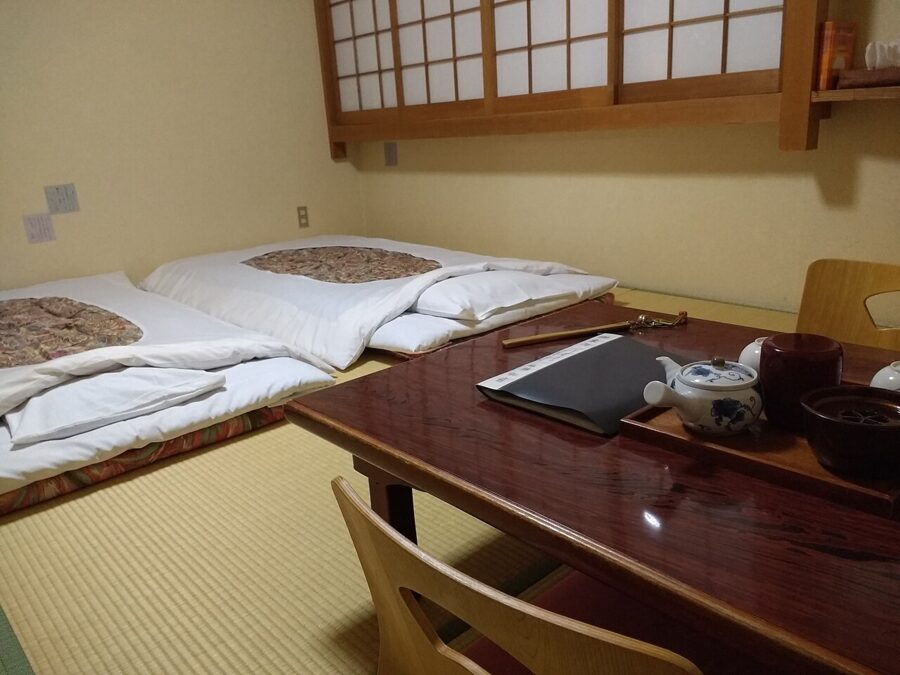
A ryokan plans your evening before you arrive. Check-in opens at 15:00, give or take half an hour, dinner is served at a time you choose at the front desk, and the futon goes down on the tatami while you eat. The stay works best when you turn up mid-afternoon with nothing else booked.
That rhythm is the whole product, and it’s why the price is quoted per person with two meals rather than per room. Prices below are as of November 2026, converted at about ¥150 to the dollar.


If you only have room for one ryokan night, make it in a hot spring town rather than a city, book a weekday, and take the dinner. A ryokan without its dinner is a small hotel with thin walls.
On this page
Ryokan, onsen ryokan or minshuku: what you are booking
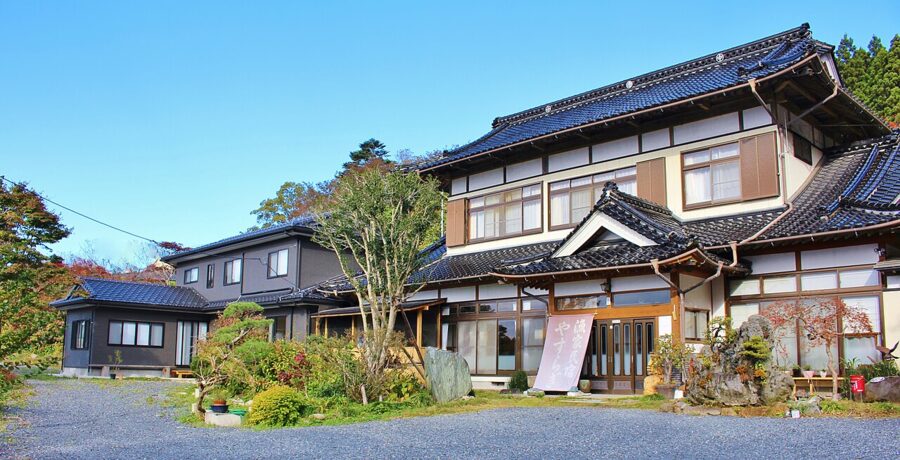
A ryokan (旅館) is a Japanese inn: tatami rooms, futon bedding, a cotton robe called a yukata, a shared bath, and dinner and breakfast made in the inn’s own kitchen. Most are small and family-run, and many have been in the same family for generations. Plenty now add Western beds, private toilets and a room or two with its own bath, so “traditional” on a booking page tells you less than the room description does.
An onsen ryokan is the same thing built on a hot spring. The water in its baths comes from a natural source, the town around it usually exists because of that source, and these are the inns most people mean when they say they want a ryokan night. A city ryokan, by contrast, often has an ordinary tiled bath filled with tap or well water. Hiiragiya in Kyoto, one of the city’s most famous inns, says plainly that it has no hot spring and uses natural groundwater.
A minshuku (民宿) is the budget cousin: a family guesthouse, often a farmhouse or a fishing family’s home, with fewer staff and fewer rules about ceremony. Expect a shared toilet down the hall, meals in a common room, and on some nights a stack of bedding you lay out yourself. The food can be the best of your trip, because the person cooking it caught or grew half of it.

Shukubo are temple lodgings, best known on Koyasan, with Buddhist vegetarian dinners and a morning service. A hotel’s “Japanese-style room” (washitsu) gives you tatami and a futon without the meals. If what you actually want is a family’s kitchen table rather than an inn’s dining room, a homestay is the better fit.
How a stay runs, from the door to breakfast
Staff explain almost everything as it happens. It still helps to know the order, because the evening runs on a schedule.
Arrival and slippers
Arrive between 15:00 and 17:00 if you can. Hiiragiya checks in from 15:00, KAI Hakone from 14:30, and most rural inns want to know if you will be later than 17:00 or 18:00 because the kitchen is counting on you. If your train is delayed, phone from the platform. A late arrival can lose the dinner you paid for.
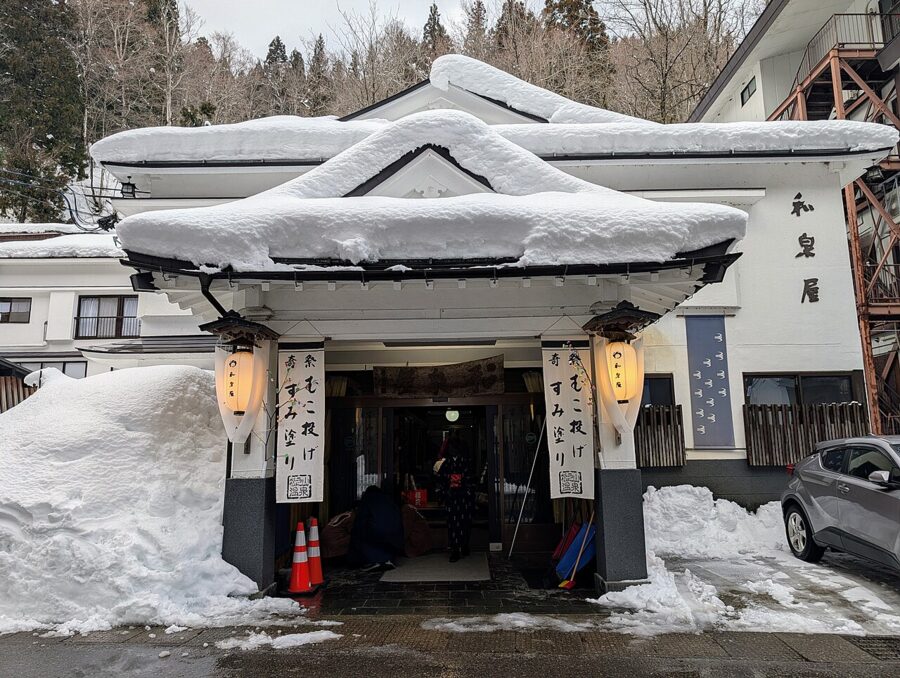

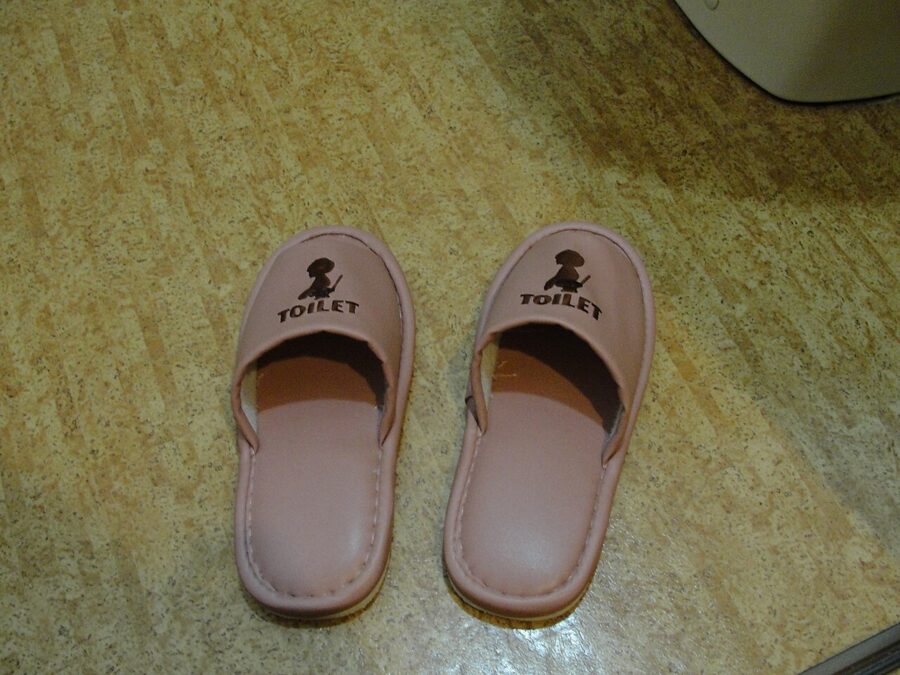
Shoes come off at the genkan, the raised step inside the entrance, and staff put them away for you. You walk the corridors in the inn’s slippers, then step out of those at the edge of the tatami: slippers never go on the mats. The bathroom has its own pair, usually labeled, and the classic mistake is shuffling back into the room still wearing them.

At the desk you show your passport. Japanese law requires inns to record the passport of every foreign guest without an address in Japan, and most take a copy. Then you choose your dinner and breakfast times, ask for the bath hours, and ask one more thing that catches people out: whether the front door is locked at night, and when.
The room
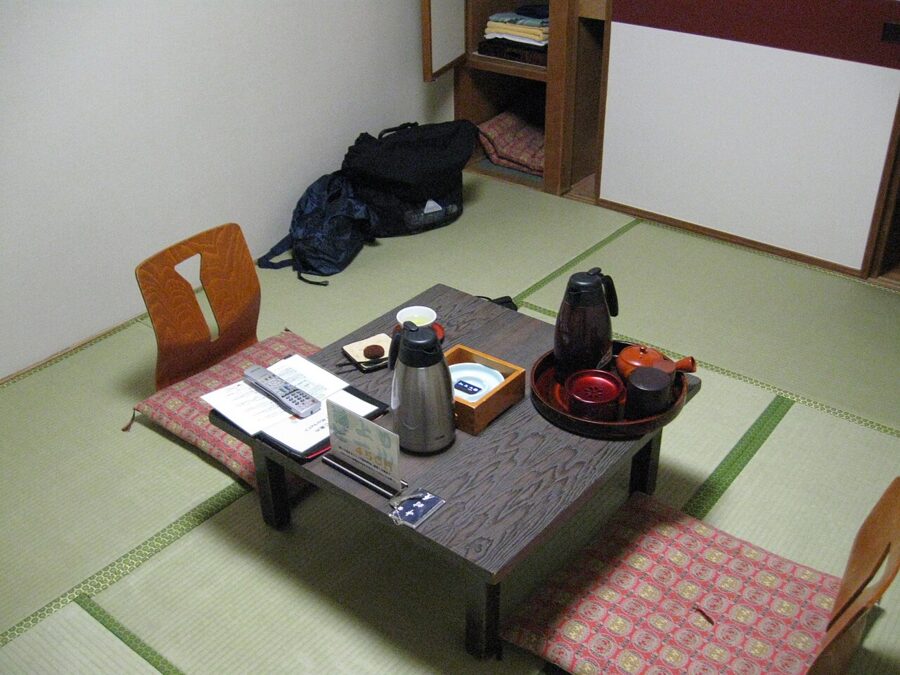
A staff member walks you to the room, and at a traditional inn this is often the person who will serve your dinner. The table will hold a pot of green tea and a small sweet, usually a local one. Eat it before you bathe: a hot spring on an empty stomach can leave you light-headed, which is why the sweet is there.

The alcove with the scroll and the flower is the tokonoma. It’s decoration, not storage, so keep bags out of it and stack them by the window instead, out of the way of the futons.
The yukata
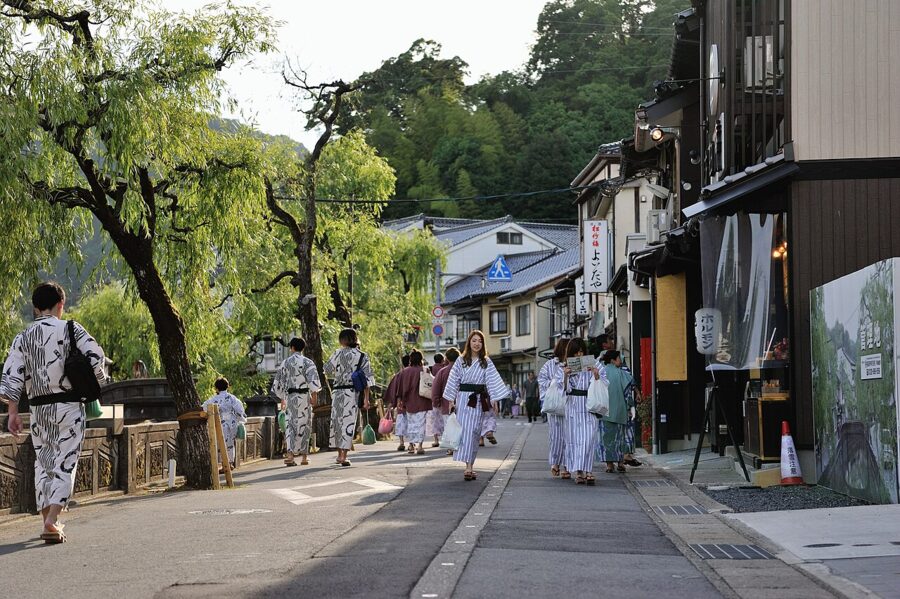
The cotton yukata in the room is yours to wear for the whole stay: in the room, to the bath, to dinner and, in hot spring towns, in the street. Wrap the left side over the right. Right over left is how the dead are dressed for a funeral, and staff will quietly fix it if you get it wrong. Tie the sash at the waist; the padded jacket (tanzen or haori) goes on top when it’s cold.
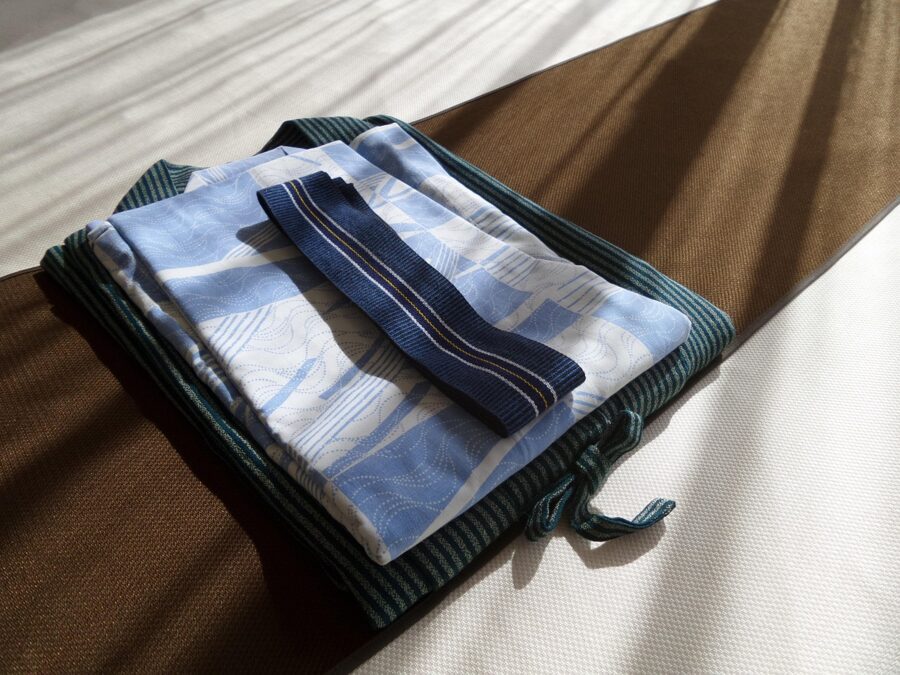
Underwear stays on under it. At onsen inns the yukata is normal dinner wear; at a city inn that serves in a restaurant, check first.
The baths
Go before dinner and again before breakfast. The large shared baths are split by sex, marked with noren curtains (男 for men, 女 for women), and at many inns the two sides swap at night so that both groups get both baths. Check the sign every time.
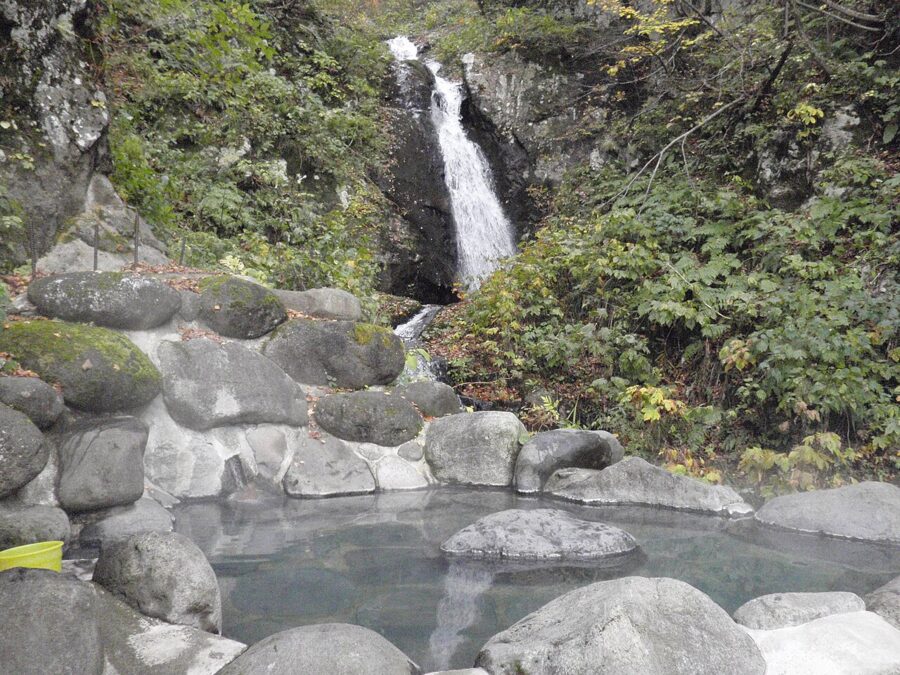
The routine is short. Undress completely in the changing room, take the small towel in with you, sit on a stool and wash with soap and shampoo, rinse off, and only then get in. The small towel never goes in the water: fold it on your head or leave it on the edge. Tie up long hair, keep your voice low, and dry off a little before you walk back onto the changing-room floor.
Dinner
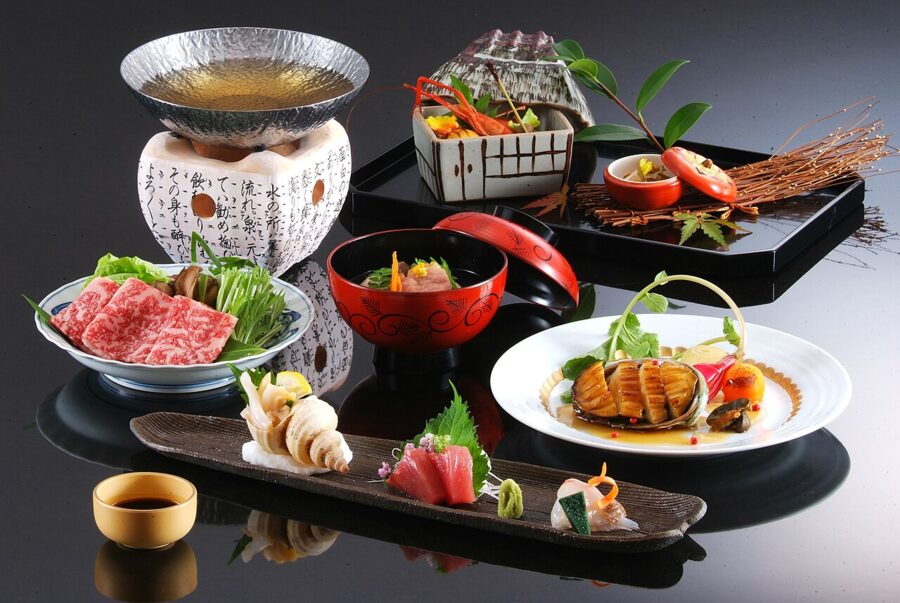
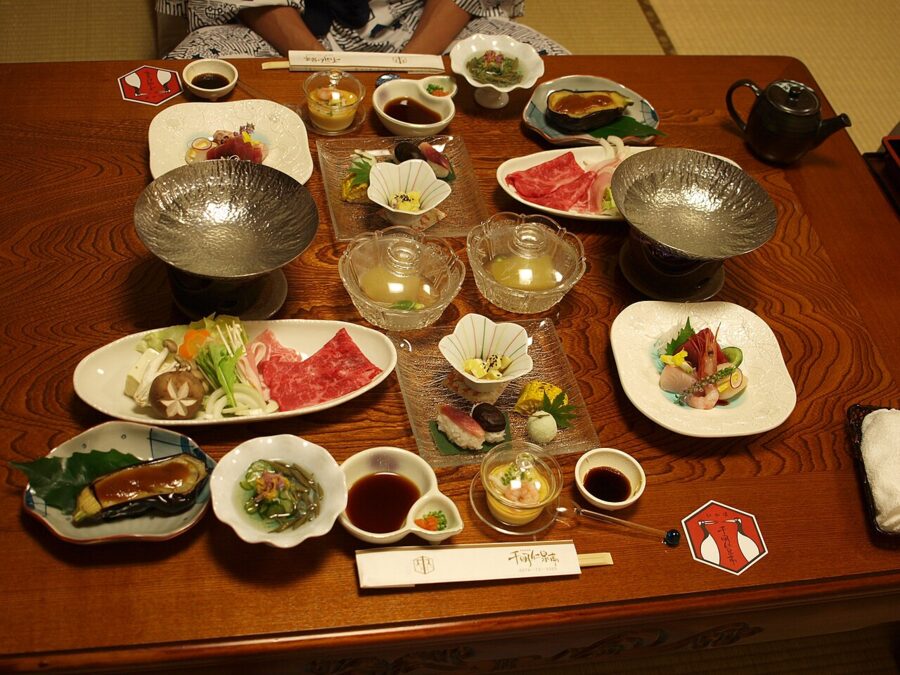
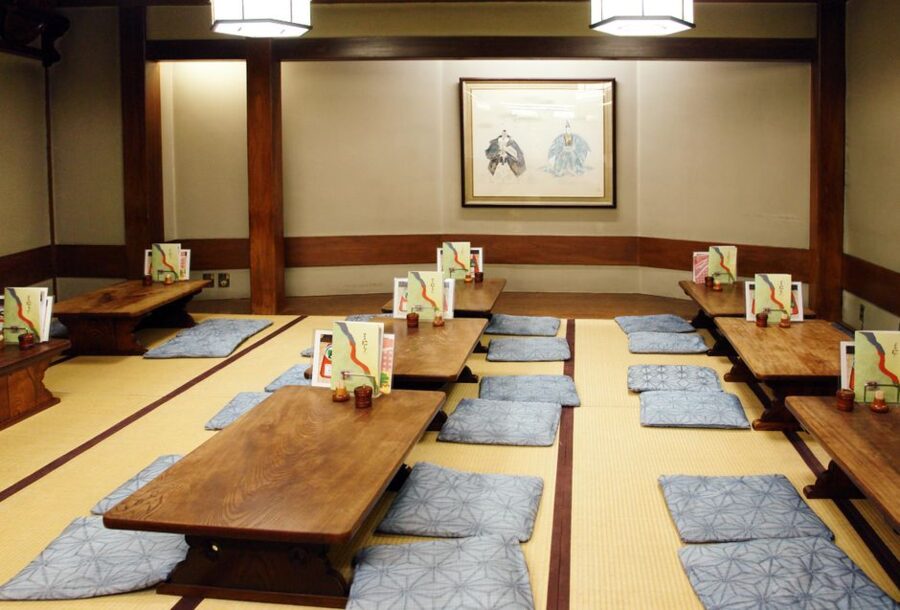
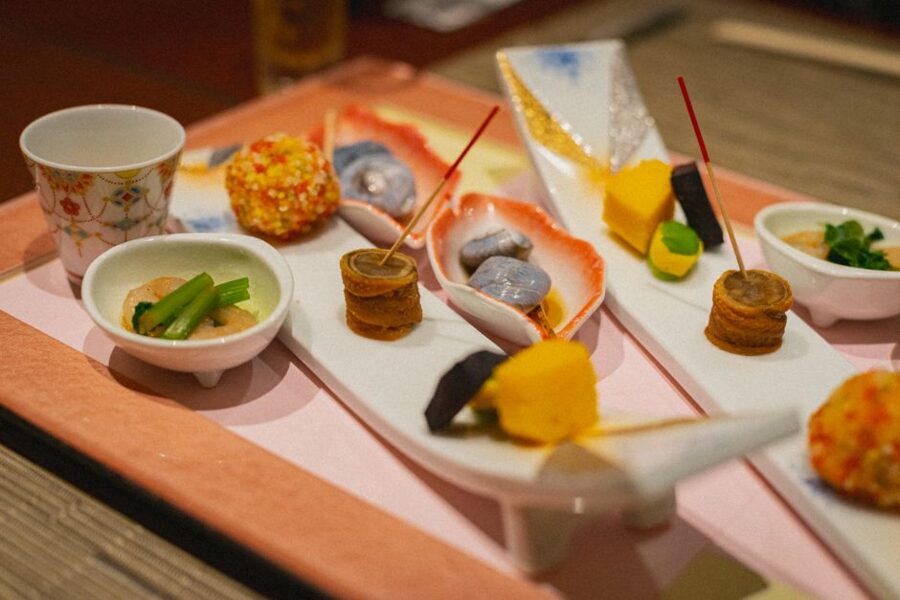
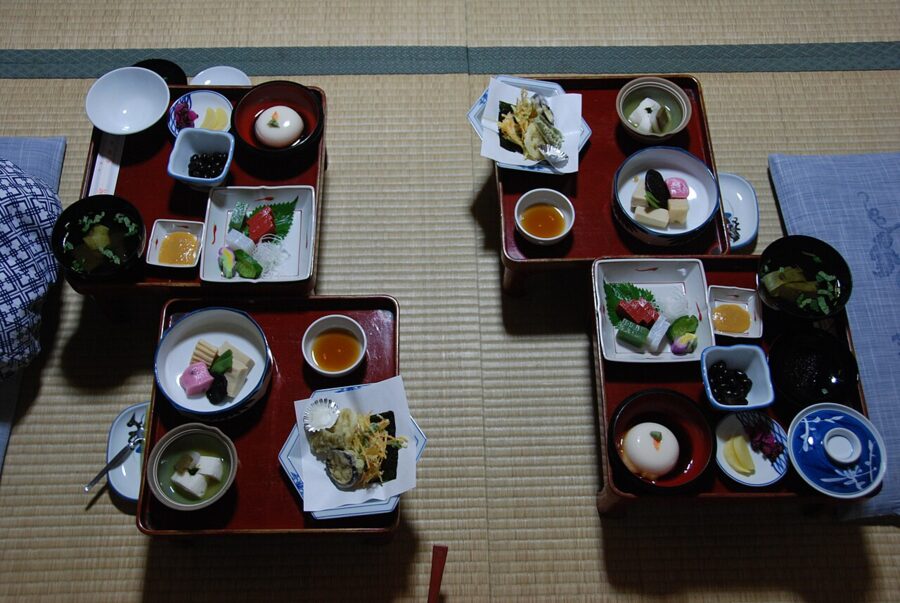
Dinner is kaiseki, a run of small seasonal courses that typically starts around 18:00 or 19:00 and takes 90 minutes to two hours. At some inns it’s served in your room; at more of them now it’s in a private dining room or a hall with partitions. Hiiragiya serves at 18:00 or 19:00, which is about the norm.
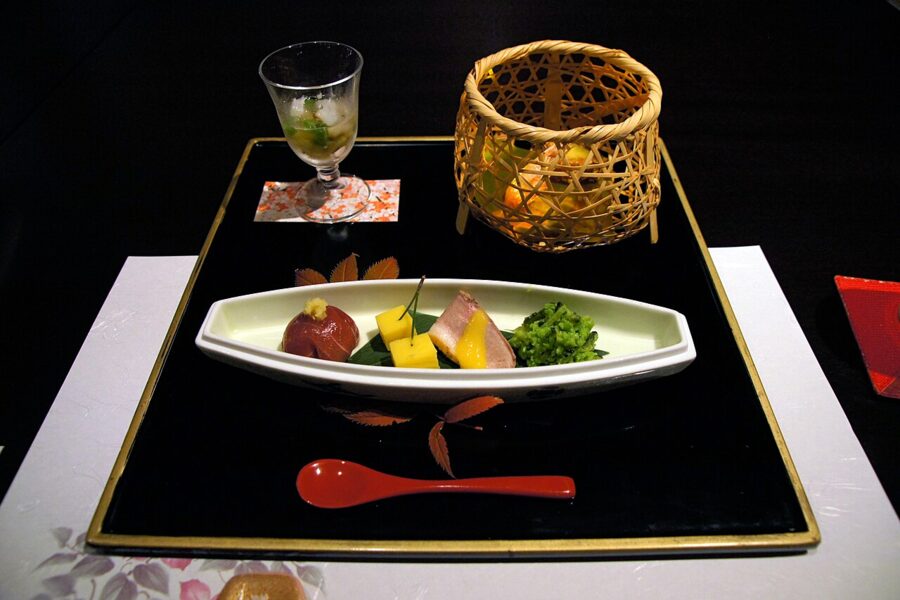

The order is roughly the same everywhere: an appetizer, a plate of seasonal bites, sashimi, something simmered, something grilled, often a small hot pot or a piece of beef you cook on a burner, then rice, miso soup and pickles to close, and fruit or a sweet. Drinks go on your bill. Nobody expects you to finish everything; if you eat little, say so when you book, and Hiiragiya, for one, makes smaller portions if told in advance.

The futon
While you eat, staff clear the table and lay the futons. Each is a thin mattress on the tatami with a duvet and a pillow that is often filled with buckwheat husks, so it crunches. If one futon is too hard, there’s usually a spare in the cupboard; ask for a second mattress and put it underneath.
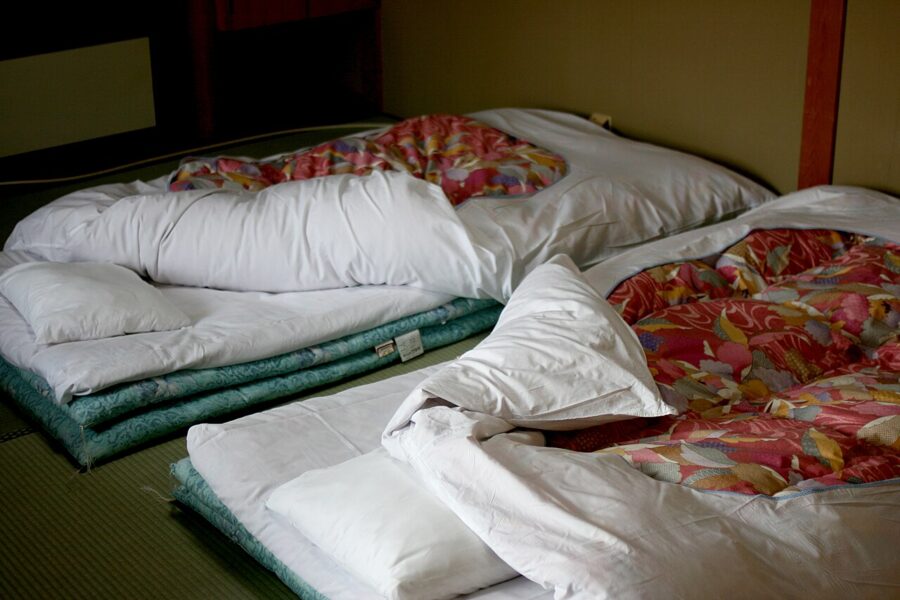

Put valuables in the safe before dinner. If you’d rather nobody came in, ask at check-in whether you can lay the futons yourself.
Breakfast and check-out
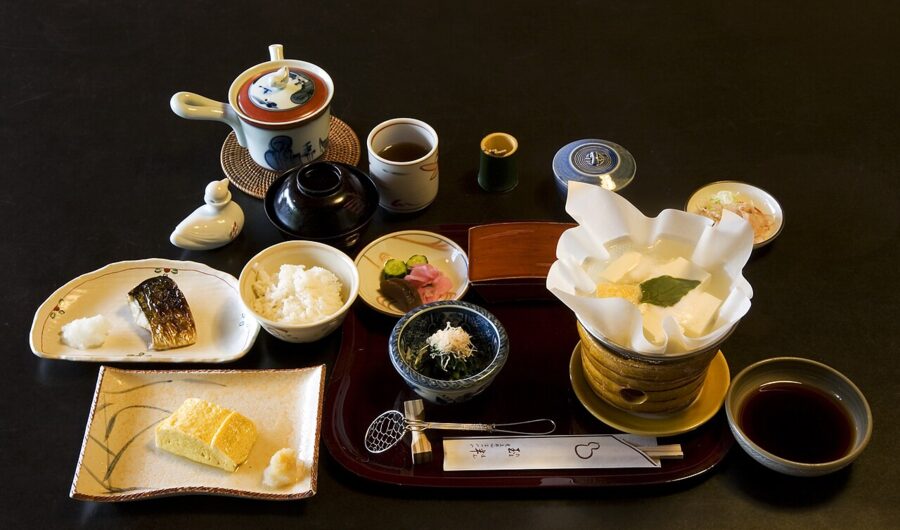
Breakfast is usually at a time you set the night before, somewhere between 07:00 and 09:00, and it’s a full meal: grilled fish, rice, miso soup, pickles, an egg dish, often tofu warmed over a small burner. A few inns offer a Western breakfast on request. Check-out is usually 10:00 or 11:00.

Pack the night before so the morning can be bath, breakfast, bill. Drinks, private-bath fees and the bathing tax are paid at the desk on the way out, and remote inns may still want cash. Tipping isn’t expected and can embarrass the staff; a thank-you at the door is the custom. Most inns will hold your bags for the day after check-out.
What a ryokan costs in 2026
Ryokan prices are per person, per night, with dinner and breakfast included unless the plan says otherwise. The standard plan is called ippaku nishoku (1泊2食付, one night with two meals); room-only is sudomari (素泊まり). A price of ¥25,000 (about $165) on a booking page means ¥50,000 (about $335) for two people sharing.
Here are the cheapest two-meal plans at 25 inns in Kinosaki Onsen in late November 2026. That’s crab season on the Sea of Japan coast, so these are high-season numbers.
| Kinosaki Onsen, cheapest two-meal plan per person, November 2026 | Yen | Dollars (about) |
|---|---|---|
| Lowest of the 25 inns | ¥15,000 | $100 |
| Middle of the range (median) | ¥31,000 | $205 |
| Highest starting price | ¥94,600 | $630 |
| Room only, cheapest listed | ¥8,500 | $57 |
Read it as three bands: budget inns and minshuku from about ¥10,000 to ¥15,000 ($65 to $100) with simple meals, a good mid-range ryokan at ¥20,000 to ¥40,000 ($135 to $265), and the famous names well above ¥60,000 ($400). The same room can swing by half depending on the date.
What pushes the price up
The date matters most. Saturdays and nights before a public holiday cost the most, then the high seasons: New Year, Golden Week, mid-August, the autumn leaves and cherry blossom weeks. A Tuesday in late January or June is about as cheap as it gets. The best time to visit Japan for crowds is also the best time for ryokan rates.
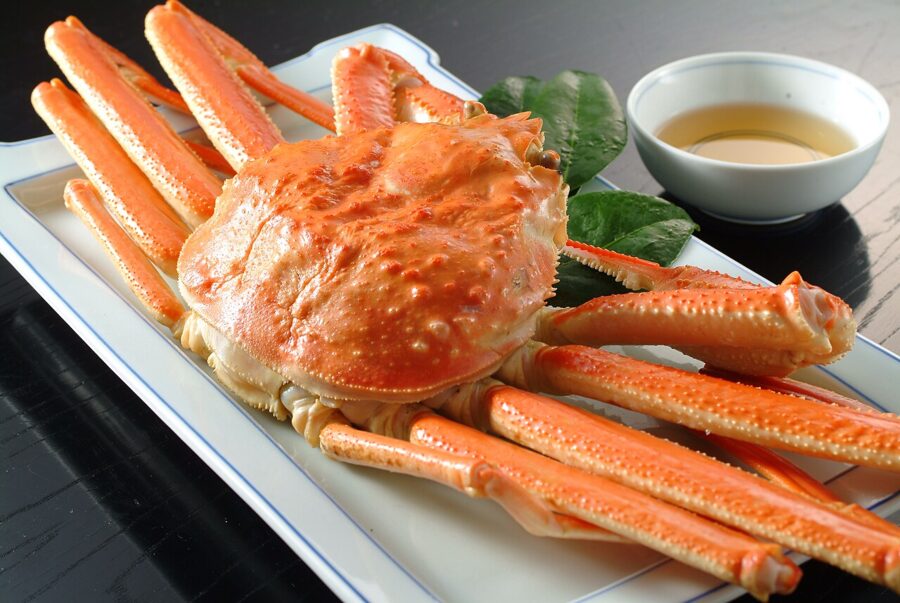

The menu matters next. Crab in Kinosaki, Hida beef in Takayama, a named wagyu anywhere: the headline ingredient can triple the plan. A room with its own open-air bath adds the most after that, and it is usually the top price at any inn. Staying alone costs more per head, and some inns won’t sell a two-meal plan to one person on a Saturday at all.
Taxes on the bill
Displayed prices in Japan include the 10% consumption tax. The bathing tax (入湯税, nyutozei) does not always appear in the online price and is often paid at the desk. Each town sets its own rate; the national standard is ¥150 (about $1) per person per night, and many towns exempt children under 12.
Some cities add an accommodation tax, and Kyoto raised its rates sharply this year. Since March 1, 2026, Kyoto City charges per person per night on the room charge alone, excluding meals and consumption tax:
| Room charge per person per night (Kyoto City) | Accommodation tax, as of November 2026 |
|---|---|
| Under ¥6,000 | ¥200 (about $1) |
| ¥6,000 to ¥19,999 | ¥400 (about $3) |
| ¥20,000 to ¥49,999 | ¥1,000 (about $7) |
| ¥50,000 to ¥99,999 | ¥4,000 (about $27) |
| ¥100,000 and over | ¥10,000 (about $67) |
If you prepaid the tax to a booking site or agent, you don’t pay it again at the inn.
Choosing an inn
Pick the town first, then the inn. A middling ryokan in a good hot spring town beats a good ryokan on a highway, because the town is half the evening.
A private bath, and which kind
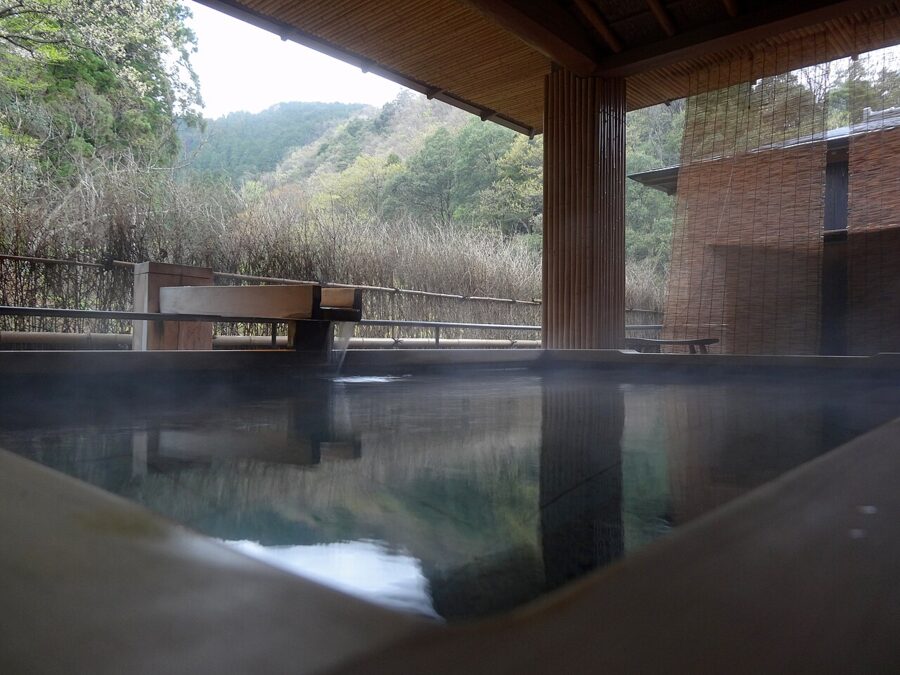
If you don’t want to bathe naked with strangers, you have two options. A kashikiri-buro (貸切風呂) is a family bath you reserve for a slot, often 40 to 50 minutes, sometimes free and sometimes for a fee. A room with its own open-air bath (客室露天風呂) costs more but is yours all night.
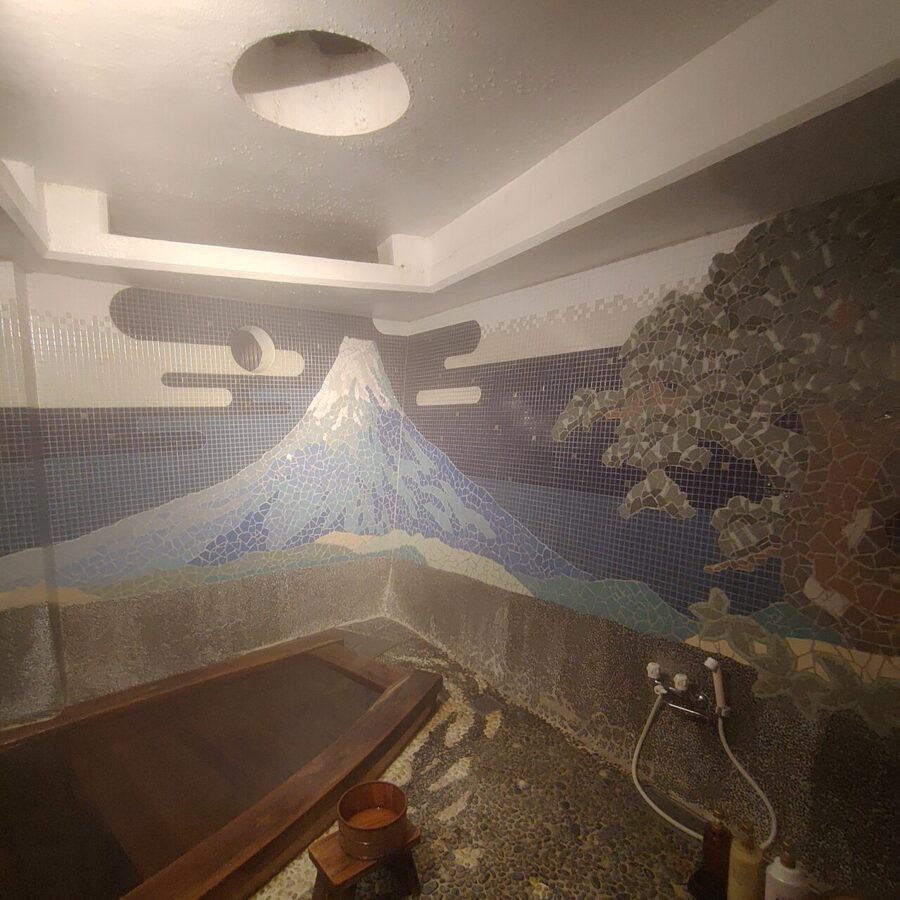
Read the room description closely. A room “with bath” may have a plain tub filled from the tap, not hot spring water, and an in-room “open-air bath” can be a cypress tub on a balcony. If the spring water matters to you, ask whether the room bath is fed from the source.

Tattoos
There’s no national rule. In 2016 the Japan Tourism Agency asked bath operators to find ways to accommodate visitors with tattoos, such as cover-up patches, set hours or private baths, and practice still varies inn by inn. Many inns that turn tattoos away in the shared bath have no objection in a reserved one.
Ask in writing before you book, with the size and place of the tattoo, and keep the reply. Or pick a town that has settled the question: all seven public bathhouses in Kinosaki Onsen accept tattoos of any size, uncovered. The inns’ own baths there set their own rules.
Traveling solo
Ryokan plans are built for two, and a single guest often pays noticeably more per person or finds the cheap plans blocked. Search for one adult before falling for an inn; weeknights and minshuku are easiest.
Allergies, vegetarians and halal
Kaiseki is built on dashi, a stock made from bonito and kelp, so “no meat” is not the same as vegetarian unless you say so. Put requests in writing when you book, not at check-in. Hiiragiya asks for at least three days’ notice for dietary needs and says it can’t prepare halal or kosher meals, which is typical of what even a top inn can manage.

For allergies, name the exact ingredient and get the reply in writing; a note in a booking site’s comments box is passed on, not promised.
Children
Most inns welcome families, and children usually love the futons and the yukata. A few inns don’t take them: Nishimuraya Honkan in Kinosaki takes guests aged 10 and over only, and a few small luxury inns are adults-only. Under Japan’s model accommodation terms, which most inns build on, children of elementary-school age and younger pay 70% of the adult rate with adult meals and bedding, 50% with children’s meals and bedding, and 30% for bedding only. Inns can set their own percentages, so check the plan.
Booking: direct or through a site
Check the inn’s own website first. Many now run English booking pages, and direct plans tend to carry the perks, such as a free private-bath slot. Nishimuraya Honkan in Kinosaki, for one, advertises a best-rate guarantee on its own site.
Japan’s own booking sites, Rakuten Travel and Jalan, list far more inns and far more plans than the international sites; Rakuten Travel runs an English version with a smaller selection. International sites are fine for city ryokan but sometimes show only a room-only plan or the priciest one for rural inns. My rule: find the inn anywhere, compare the same plan on two sites and the inn’s own page, then book whichever is cheapest for that exact plan.
Before you pay, check the plan line by line, in this order:
- Room type (washitsu, yoshitsu or wayoshitsu) and whether the toilet is private.
- Both meals included, where they’re served, and the latest dinner start.
- Private-bath fees and tattoo rules.
- The total with taxes, per person or per room.
- Latest check-in, and any station pickup you must book.
- When cancellation charges start.
Book early for weekends in autumn and at New Year, three to six months ahead for the well-known inns. Weekday stays outside the holidays can often be booked a few weeks out.
Cancellation rules
There’s no fixed national scale. The model terms most inns adopt leave the percentages blank for each inn to fill in, and the inn’s own table is what applies. A pattern you’ll often see for small parties is 20% of the room charge the day before, 50% to 80% on the day, and 100% for a no-show, with some inns charging from a week out in peak season. Booking-site plans can carry their own terms, including cheap non-refundable rates, so read both.
Six ryokan towns worth the trip
Each of these six has inns at every price. Where a route is on JR trains, the Japan Rail Pass covers the long leg.
Kinosaki Onsen, Hyogo
Kinosaki is the town I’d send anyone to first. Seven public bathhouses sit along a willow-lined canal, and the town is built for walking between them in yukata and geta. Guests usually get a Yumepa pass at check-in that covers every bathhouse; day visitors pay ¥1,500 (about $10) for a day pass.
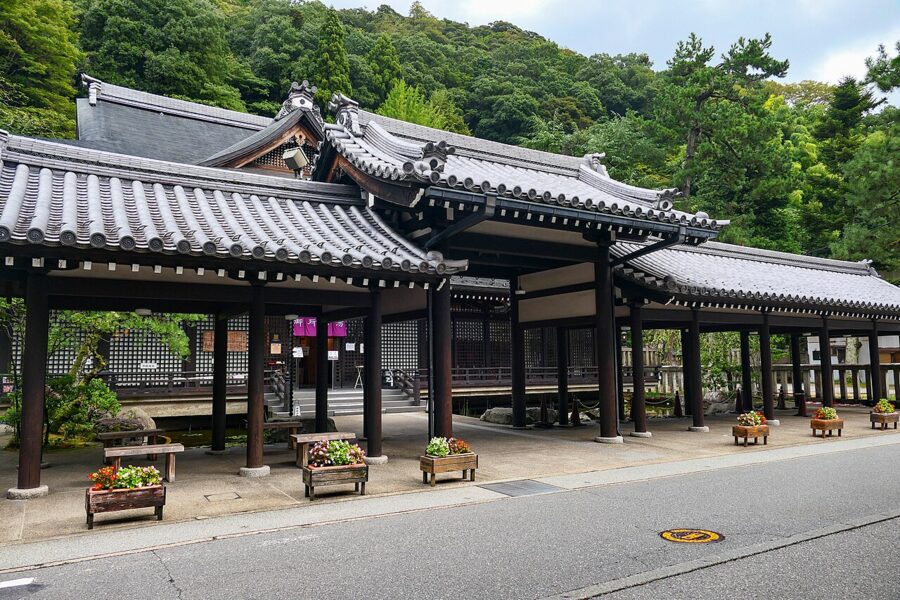
Two caveats for 2026. Satono-yu, by the station, has been closed for renovation since April 1, 2024, with no reopening date announced, so “seven” is really six for now. Kono-yu was shut for renovation from May 11 to October 30, 2026. The baths keep their own hours: most open 07:00 to 23:00, while Mandara-yu and Yanagi-yu open at 15:00.
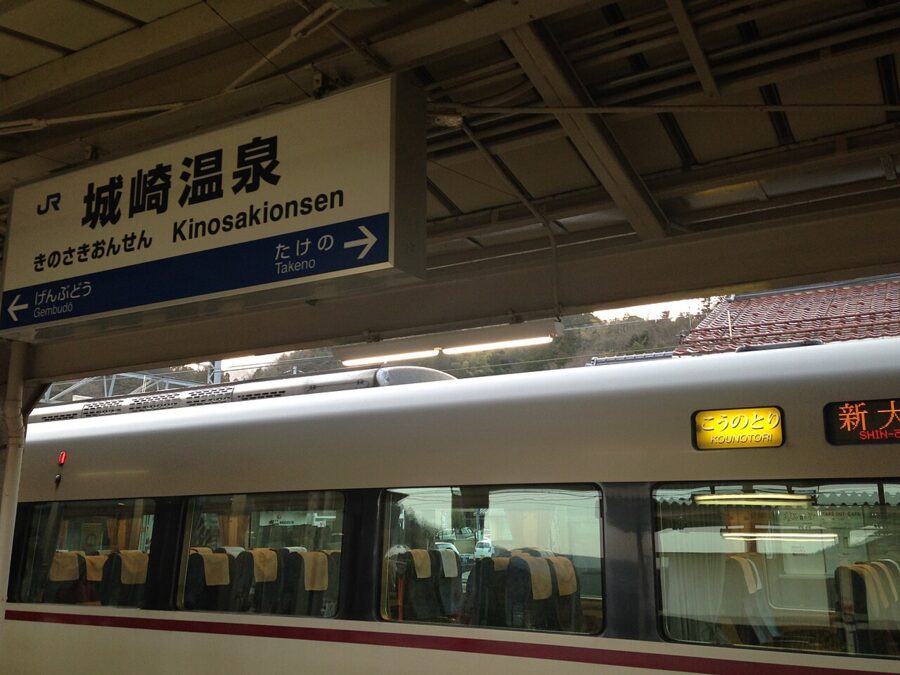

Getting there: JR limited express trains run from Kyoto (the Kinosaki), from Shin-Osaka and Osaka (the Konotori) and from Himeji, about two and a half hours from Kyoto or Osaka. The Japan Rail Pass and the JR West Rail Pass cover them. Go from November to March for crab, and pay for it.
Hakone, Kanagawa
Hakone is the easy one from Tokyo, a cluster of hot spring villages in the hills with Hakone-Yumoto at the bottom. The Odakyu Romancecar takes about 80 minutes from Shinjuku to Hakone-Yumoto, with a ¥1,200 (about $8) limited express fee on top of the fare. The two-day Hakone Freepass from Shinjuku is ¥7,100 (about $47) as of November 2026 and covers the trains, cable car, ropeway and lake boat once you’re there.
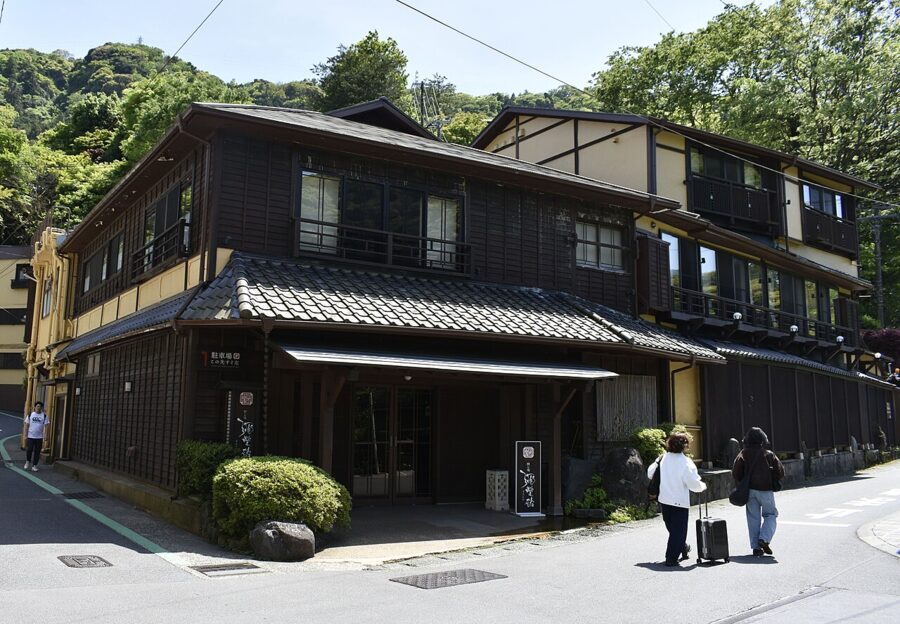

The drawback is that it’s everyone’s easy one, so weekend rates are high. Go midweek and give the afternoon to the bath, not the sights.
Kusatsu Onsen, Gunma
Kusatsu counts its natural flow of hot water as the largest in Japan, and you can see it: the Yubatake, a steaming field of wooden channels in the town square, runs the spring water through to cool it. The town has no train station. Take the JR Limited Express Kusatsu-Shima from Ueno to Naganohara-Kusatsuguchi, then the JR bus for about 25 minutes to the Kusatsu Onsen bus terminal.
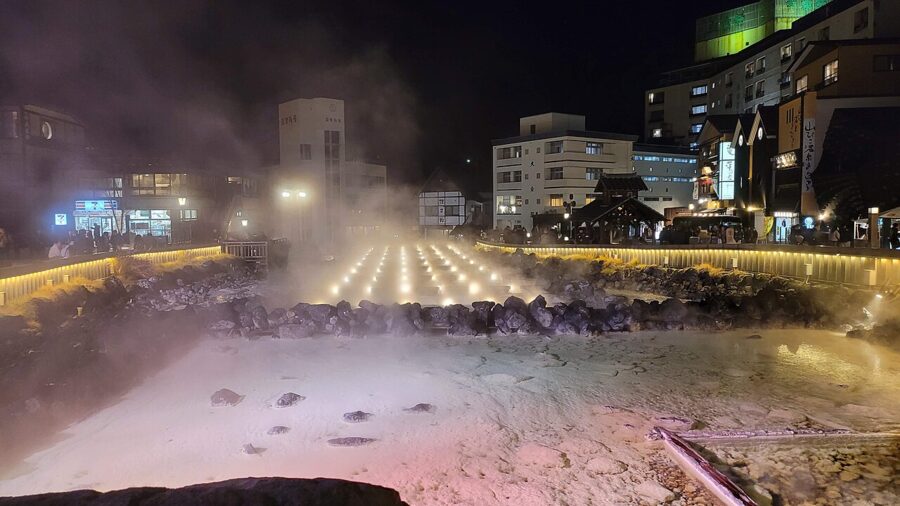
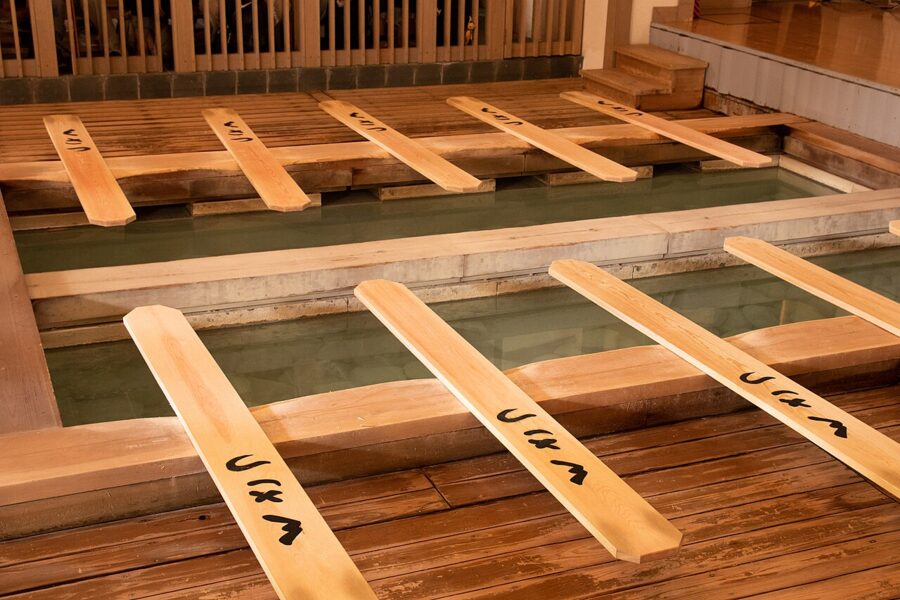
The water is strongly acidic and very hot. At Netsunoyu, beside the Yubatake, you can watch yumomi, the old way of cooling the water by churning it with long wooden boards to a work song. Kusatsu’s inns run from family places to big hotels, and it’s one of the cheaper famous towns.

Ginzan Onsen, Yamagata
Ginzan is one short street of three- and four-story wooden inns facing each other across a river, lit by gas lamps at night. It’s one of the most photographed views in Japan, and in winter it’s swamped. Take the Yamagata Shinkansen to Oishida, then the local bus, about 40 minutes.
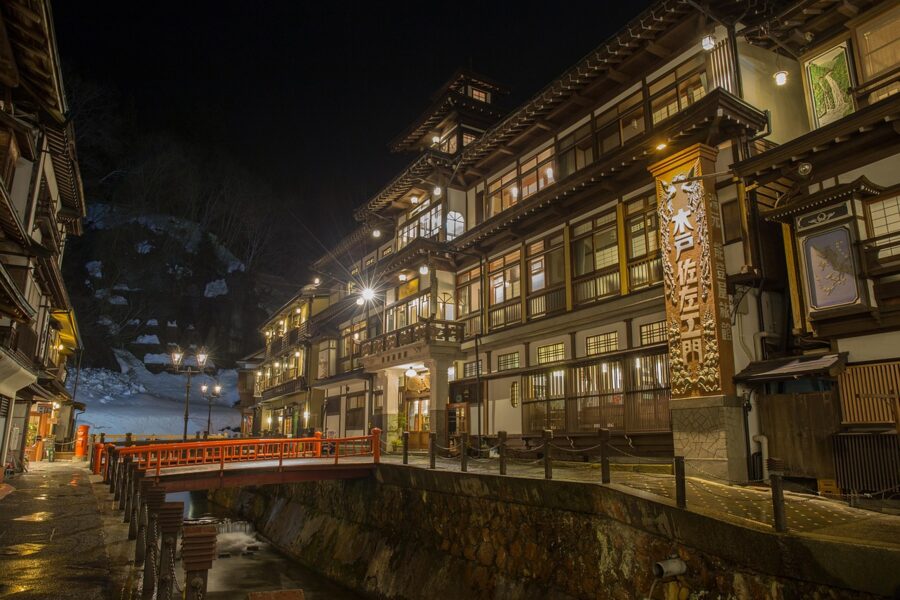
Staying the night is also the only way in after dark in peak winter. In the winter of 2024 to 2025 the town limited day visitors in the evening, with tickets for a set window and no entry for non-guests late at night, while guests with an inn booking were exempt. As of October 2026 the rules for winter 2026 to 2027 hadn’t been published, so check Obanazawa City’s notices before you plan a day trip. With barely more than a dozen inns on the street, rooms for January and February go months ahead.
Yufuin, Oita
Yufuin is a valley town under Mount Yufu in Kyushu, with inns spread among rice fields and woods instead of packed on a street. Many are clusters of detached cottages, each with its own bath, which makes Yufuin the place to book if private bathing is the priority. The town center is touristy by day and quiet by 18:00.
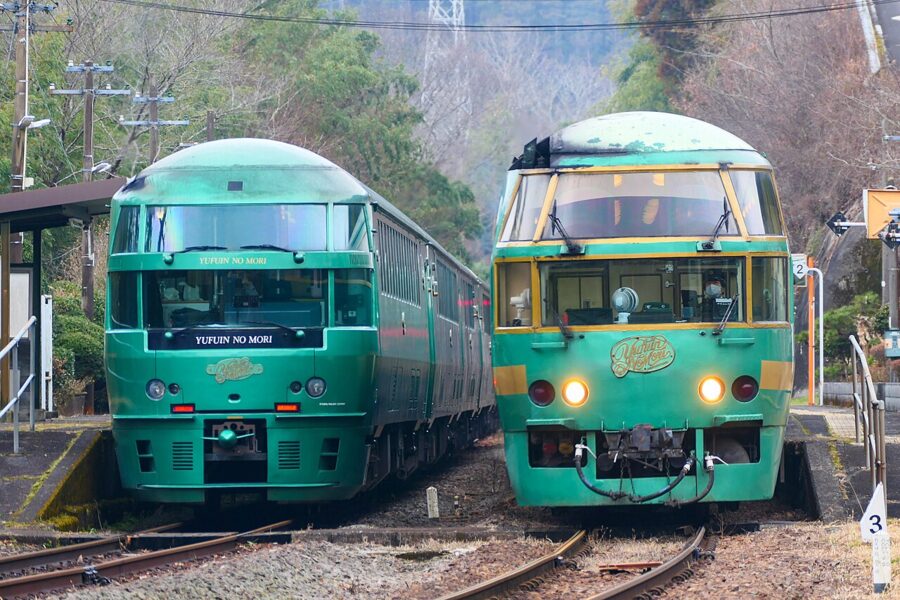
The scenic way in is JR Kyushu’s Yufuin no Mori from Hakata, about 2 hours 15 minutes on the January 2026 timetable, with two round trips a day. Book seats the day they open.
Kyoto
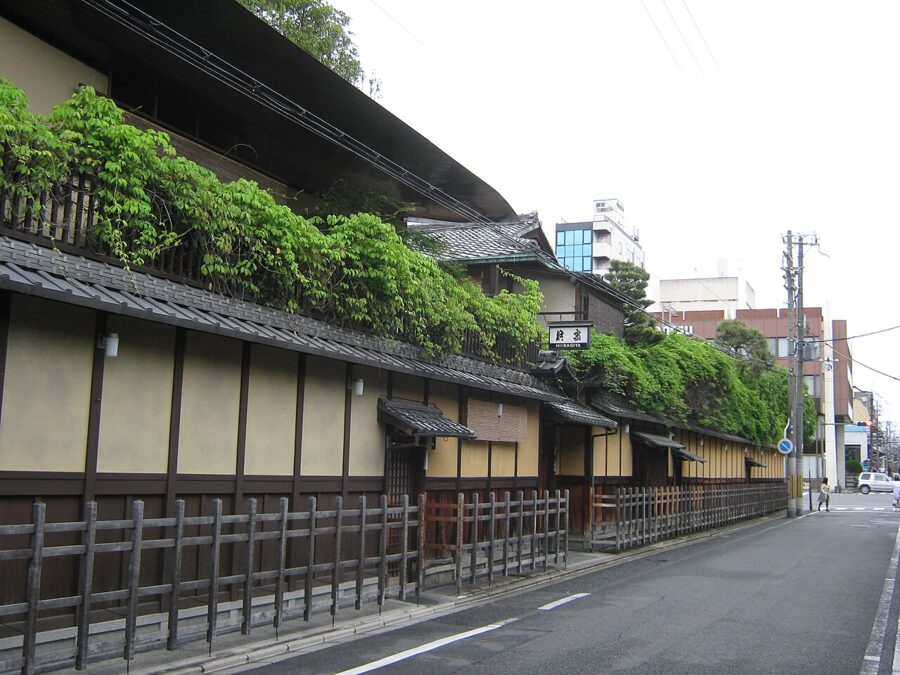
Kyoto is the exception on this list: few of its inns have a hot spring, and you come for the building, the garden and the cooking. The old central inns, Hiiragiya and Tawaraya among them, are famous enough to book months ahead, and both cost well into the top band. Smaller family ryokan around the city cost a fraction, and many sell breakfast-only plans so you can eat out at night.

Budget for the accommodation tax above: at a ¥60,000 room charge per person, two people pay ¥8,000 (about $53) a night on top. If you want a hot spring and a Kyoto ryokan in one trip, stay in the city for the food and add Kinosaki, two and a half hours north, for the baths.
Quick answers
Is there a ryokan in Tokyo? Yes, a few. HOSHINOYA Tokyo in Otemachi is a ryokan tower with a guest-only hot spring bath, about 10 minutes’ walk from Tokyo Station, and there are small family ryokan in older neighborhoods. For the full experience, though, Hakone is 80 minutes away.
Do I have to eat dinner at the inn? Not always. Room-only and breakfast-only plans exist, but many onsen inns only sell the two-meal plan, and in small towns the restaurants close early. Kyoto is the easiest place to skip it.
Can I go out after dinner? Yes, but ask what time the front door is locked. Some smaller inns close it around 22:00 or 23:00.
Choose the town, book the inn’s own two-meal plan for a weeknight, and tell them what time your train gets in. They will run the rest of the evening, starting with the tea.